Browse

Log in / Register
 Share

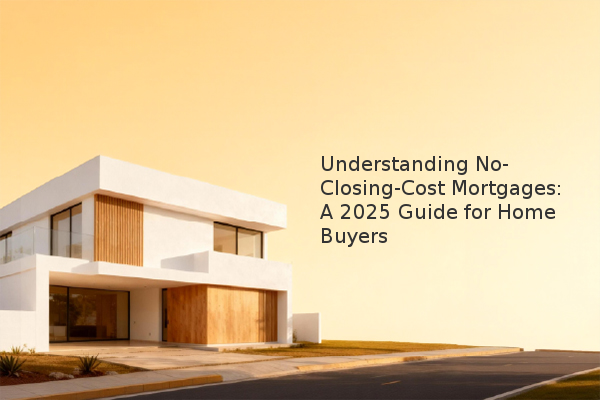
A no-closing-cost mortgage is a home loan where the lender covers the upfront fees associated with the mortgage, typically in exchange for a higher interest rate over the life of the loan. For home buyers, the primary advantage is significantly reduced cash needed at closing, but this comes with a long-term financial trade-off that requires careful evaluation.
This financing option is not "free"; the costs are simply rolled into the loan balance or offset by the elevated interest rate. Understanding this fundamental trade-off is crucial for determining if a no-closing-cost mortgage aligns with your financial goals, whether you're a first-time buyer with limited savings or a homeowner planning a short-term stay.
Before delving into the specifics of a no-closing-cost mortgage, it's essential to understand what closing costs are. Closing costs are the fees and expenses you pay to finalize a mortgage, separate from your down payment. These typically range from 2% to 5% of the home's purchase price. For a $400,000 home, that translates to $8,000 to $20,000 due at closing.
Common closing costs include:
Lenders offer to pay these upfront costs in one of two primary ways. The most common method is by charging a higher interest rate. The lender effectively uses the additional interest revenue collected over time to recoup the fees they paid on your behalf. The second method involves adding the total closing costs to your loan balance, which increases your monthly payment and the total interest paid.
To illustrate the financial impact, consider the following comparison for a 30-year fixed-rate mortgage of $400,000:
| Scenario | Interest Rate | Monthly Principal & Interest | Total Closing Costs at Closing |
|---|---|---|---|
| Standard Mortgage | 6.5% | $2,528 | $12,000 (3%) |
| No-Closing-Cost Mortgage | 6.875% | $2,628 | $0 |
As shown, the no-closing-cost option saves you $12,000 immediately but increases your monthly payment by $100. Over a year, that's an extra $1,200, meaning the "break-even" point—where your cumulative higher payments equal the saved closing costs—is approximately 10 years. If you sell or refinance before this point, the no-closing-cost option may be financially beneficial.
This type of loan is a strategic tool for specific situations. It is not a one-size-fits-all solution. Based on our experience assessment, it is often most suitable for:
When considering this option, it's vital to get full transparency from your lender. Be sure to ask:
The decision to choose a no-closing-cost mortgage hinges on a clear analysis of your timeline and financial priorities. While the immediate relief on cash flow is attractive, it is essential to calculate the long-term cost. For buyers planning to stay in their homes long-term, a standard mortgage with a lower rate is generally more economical. Always request side-by-side comparisons from lenders to make a fully informed choice that supports your homeownership journey.