Browse

Log in / Register
 Share
Share
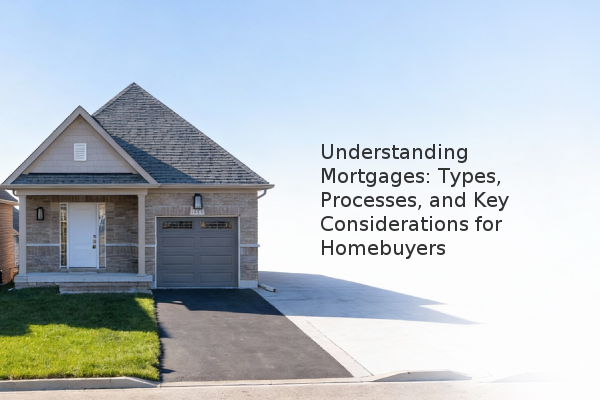
Securing a mortgage, a type of loan specifically used to purchase real estate where the property itself serves as collateral, is a fundamental step for most homebuyers. The process involves understanding different loan types, meeting specific lender requirements, and managing long-term financial commitments. This guide provides an objective overview of the mortgage landscape, empowering you with the knowledge to navigate this critical financial decision effectively.
What Are the Primary Types of Home Mortgages? Home loans are primarily categorized by their interest rate structure and term length. A fixed-rate mortgage offers a stable interest rate and consistent monthly payment for the entire loan term, typically 15 or 30 years, providing predictability for budgeting. Conversely, an adjustable-rate mortgage (ARM) features an initial fixed-rate period, after which the interest rate adjusts periodically based on a market index. ARMs may offer lower initial payments but carry the risk of future increases. Government-backed loans, such as those from the Federal Housing Administration (FHA), the Department of Veterans Affairs (VA), and the U.S. Department of Agriculture (USDA), have unique eligibility requirements and often feature lower down payment options for qualifying borrowers.
| Mortgage Type | Key Feature | Typical Down Payment | Best For |
|---|---|---|---|
| Conventional Fixed-Rate | Interest rate remains constant. | 3%-20% | Buyers seeking payment stability. |
| Adjustable-Rate (ARM) | Rate adjusts after initial period. | 3%-20% | Those planning to sell/refinance soon. |
| FHA Loan | Backed by the Federal Housing Administration. | 3.5% | Buyers with lower credit scores. |
| VA Loan | For eligible veterans/service members. | 0% | Qualified military personnel. |
| USDA Loan | For properties in designated rural areas. | 0% | Buyers in eligible rural locations. |
What Are the Key Steps in the Mortgage Process? The mortgage process is a multi-stage sequence that begins long than making an offer on a home. It starts with a pre-approval, which is a lender's conditional commitment to loan you a specific amount based on a preliminary review of your finances. This step strengthens your position as a serious buyer. After your offer is accepted, you enter the formal application phase, submitting detailed financial documentation. The lender then orders an appraisal to ensure the property's value supports the loan amount. This is followed by the underwriting process, where the lender conducts a thorough verification of all provided information before issuing a final approval and clearing the loan for closing, where the final documents are signed.
How Do Lenders Determine Eligibility and Interest Rates? Lenders assess risk through a meticulous evaluation of several factors, collectively known as the "Four Cs": Credit, Capacity, Capital, and Collateral. Your credit score is a numerical representation of your creditworthiness, with higher scores generally qualifying for lower interest rates. Capacity refers to your ability to repay the loan, analyzed via your debt-to-income ratio (DTI). Capital includes your savings and assets for the down payment and closing costs. The collateral is the property itself, which is vetted through the appraisal and inspection. Based on this assessment, lenders determine your eligibility and the specific interest rate, which directly impacts your monthly payment and the total cost of the loan over time.
What Additional Costs Are Associated with a Mortgage? Beyond the principal and interest payments, homeowners must account for several ongoing costs. Private Mortgage Insurance (PMI) is typically required on conventional loans with a down payment of less than 20% and protects the lender in case of default. Property Tax, levied by local governments, and Homeowners Insurance, which protects against damage, are often collected monthly as part of an escrow account managed by the lender. It is also critical to understand the implications of property transfer taxes, which are one-time fees imposed by state or local jurisdictions when the title of the property is transferred from the seller to the buyer. These taxes vary significantly by location and are a key part of the closing costs.
In summary, obtaining a mortgage requires a clear understanding of loan types, a methodical approach to the application process, and a realistic assessment of associated costs. Key takeaways include getting pre-approved to define your budget, comparing loan offers from multiple lenders, and accounting for all recurring expenses beyond the principal and interest. Based on our experience assessment, thorough preparation is the most reliable path to securing a mortgage that aligns with your long-term financial health.