Browse

Log in / Register
 Share

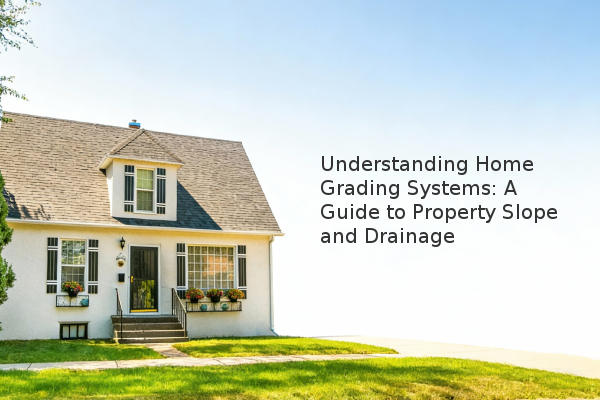
A home's grading—the slope of the land around its foundation—is a critical yet often overlooked factor in property integrity and value. Proper grading directs water away from the foundation, preventing costly structural damage, basement flooding, and mold issues. Based on our experience assessment, a well-graded property is a fundamental element of a sound home investment, directly impacting its long-term health and marketability.
What is Property Grading and Why Does It Matter?
Grading refers to the angle and shape of the ground surrounding a building's foundation. The primary purpose of proper grading is to manage stormwater runoff. When land slopes away from the foundation, it creates a natural drainage system. The industry standard, often mandated by local building codes, is a minimum slope of 6 inches for the first 10 feet. Failure to achieve this can lead to hydrostatic pressure, where water saturates the soil and pushes against foundation walls, causing cracks and leaks. Correcting poor grading can be a significant expense, making it a key inspection point for buyers.
How to Assess Your Home's Current Grading
Evaluating your property's grading is a manageable task. Start by visually inspecting the perimeter of your home after a rain shower. Look for areas where water pools near the foundation. You can perform a simple test with a string level and two stakes. Place one stake near the foundation and another ten feet away. Attach the string tautly between them and use the level to ensure it's straight. Measure the vertical distance from the string to the ground at the second stake; it should be at least 6 inches lower than at the foundation stake. Consistently wet soil, efflorescence (white, chalky stains on foundation walls), and cracks are all indicators of potential grading problems.
| Common Grading Problem | Potential Consequence |
|---|---|
| Negative Grade (slopes toward house) | Basement flooding, foundation cracks |
| Flat Grade (no slope) | Water saturation near foundation |
| Eroded Slope | Exposed foundation, improper drainage |
Solutions for Correcting and Improving Property Drainage
If your assessment reveals issues, several solutions exist. For minor problems, regrading by adding dense, clay-rich soil (like topsoil) to create a slope away from the house is often sufficient. This soil should be compacted to prevent settling. For more significant drainage challenges, installing a French drain—a perforated pipe surrounded by gravel that redirects groundwater—can be highly effective. Another solution is to create a swale, which is a shallow, grassy ditch that channels water away. In all cases, downspout extensions are a simple and crucial first step, ensuring roof runoff is discharged at least 5 to 10 feet away from the foundation.
The Impact of Grading on Property Value and Insurance
A home with documented grading issues can see a reduction in its appraised value, as appraisers note the cost of future repairs. Conversely, a well-drained property is a more attractive asset. Furthermore, homeowners insurance may not cover water damage resulting from chronic drainage problems deemed a maintenance issue. Proactively addressing grading can prevent claims denials and potentially lead to lower premiums by reducing the risk of water-related damage.
Understanding your home's grading system is not just about maintenance; it's about protecting your investment. Proper drainage prevents foundation damage, improves marketability, and can reduce insurance risks. During your next property inspection, pay close attention to the land's slope and look for signs of water intrusion. Addressing minor grading issues early is a predictable and cost-effective strategy for long-term property health.