Browse

Log in / Register
 Share

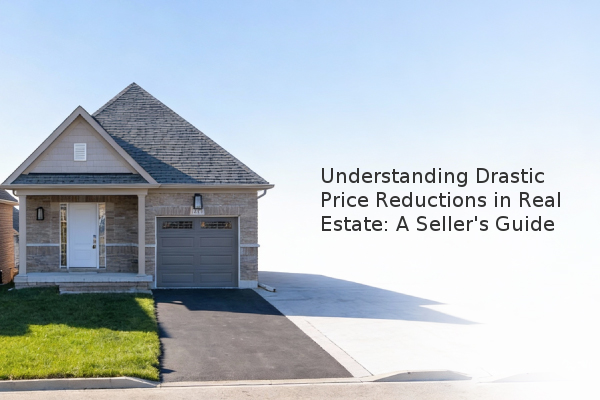
A drastic price reduction is a strategic tool used by sellers to stimulate interest in a property that has been on the market without offers. For a home not attracting buyers, a significant price cut can be the most effective action to align with current market value and secure a sale. This guide explains the process, key considerations, and potential outcomes based on current 2026 market dynamics.
A drastic price reduction is not a minor adjustment. It is a substantial decrease, typically between 10% and 15% or more from the original listing price, designed to signal a strong motivation to sell and capture the attention of both buyers and their real estate agents. This strategy is often employed after a property has been listed for 30-60 days with little to no serious interest. The goal is to reposition the home competitively within the market, making it appear as a strong value compared to similar properties. The key is to reduce the price enough to break through market noise and create a sense of urgency.
Several factors indicate that a price reduction may be necessary. The most obvious is a lack of showings or offers after a reasonable market exposure period. If feedback from potential buyers consistently cites the price as the primary objection, it is a clear signal. Additionally, if comparable homes (comps), which are recently sold properties similar in size, condition, and location, are selling for significantly less, the original listing price may be unrealistic. A change in the local market, such as an increase in inventory or rising mortgage interest rates, can also necessitate a price adjustment to remain competitive.
The primary benefit of a strategic price reduction is generating renewed interest and potentially sparking a bidding war, leading to a final sale price closer to the original goal. It demonstrates to the market that the seller is serious and adaptable. However, there are risks. A drastic cut might lead buyers to suspect hidden problems with the property. There is also the financial impact of selling for less than initially anticipated. To mitigate these risks, the decision should be data-driven. Sellers should review a Comparative Market Analysis (CMA) with their agent, a report that details active, pending, and sold comps, to set a new, competitive price based on objective data.
Determining the new price is a analytical process, not a guessing game. It begins with a fresh CMA to assess the current market landscape. The new price should be set at or slightly below the sold price of the most relevant comps to make the property the best value in its category. For example, if similar homes have sold for around $1.7 million, a reduction to $1.6 million makes the property stand out. It’s also crucial to consider the carrying costs, such as mortgage payments, property taxes (a mandatory annual tax levied by local governments based on the property's value), and maintenance, which continue to accrue the longer the home remains unsold.
In summary, a drastic price reduction is a powerful strategy for motivated sellers. To maximize its effectiveness: