Browse

Log in / Register
 Share

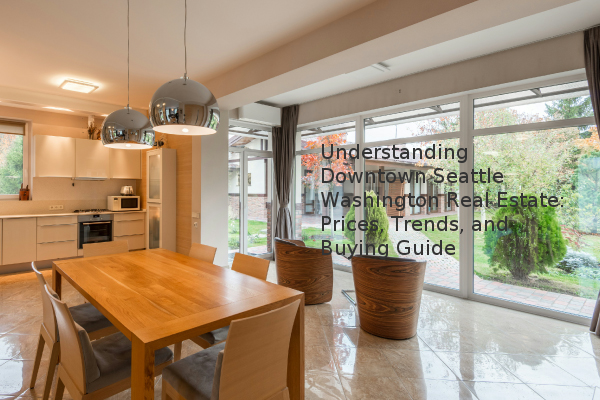
The Downtown Seattle, Washington real estate market is characterized by high demand and premium prices, with the median sale price for condos consistently exceeding the city-wide average. For buyers, success hinges on understanding the competitive landscape, the unique costs of high-rise living, and the long-term value proposition of an urban lifestyle. This guide provides a data-driven overview to inform your decision-making process.
The core of Downtown Seattle commands a price premium due to its concentration of employment centers, cultural amenities, and limited land for new development. The market is predominantly composed of condominiums, with a smaller inventory of co-ops and high-end townhomes. Property taxes are a significant annual cost, calculated as a percentage of the assessed value. According to recent market analyses, the median sale price for a condo in Downtown Seattle ranges between $800,000 and $1.2 million, varying significantly by building, view quality, and floor level.
To illustrate the price range, consider this sample data for a two-bedroom condo:
| Building Feature Tier | Estimated Price Range | Square Footage |
|---|---|---|
| Standard (No View) | $800,000 - $950,000 | 800-1,000 sq ft |
| Moderate (Partial Water/City View) | $950,000 - $1.1 million | 850-1,100 sq ft |
| Premium (Unobstructed Water/Mountain View) | $1.1 million - $1.5 million+ | 900-1,200 sq ft |
It's crucial to budget for the homeowners association (HOA) fee, a monthly charge that covers building maintenance, amenities, and insurance. In Downtown high-rises, these fees can range from $500 to over $1,200 per month.
Purchasing a property in a dense urban center requires due diligence beyond the standard home-buying checklist. A critical step is securing title insurance, which protects the homeowner and lender from financial loss due to defects in the property title, such as unknown liens or ownership disputes. Given the history of land development in Seattle, a thorough title search is non-negotiable.
You must also scrutinize the HOA's financial health and rules. Request the HOA's reserve study to ensure adequate funds are set aside for major future repairs. Review the covenants, conditions, and restrictions (CC&Rs) to understand rules on rentals, pet policies, and renovation limitations. Furthermore, investigate the building's soundproofing and construction quality, as noise transfer can be an issue in high-density living.
The transaction process in Downtown Seattle is often faster and more competitive than in suburban markets. Pre-approval from a lender is not just recommended; it is essential to have your offer taken seriously. Many sellers favor offers with minimal contingencies, but based on our experience assessment, waiving the inspection contingency can be risky. Instead, consider a pre-inspection or an informational-only inspection clause.
Working with a real estate agent experienced in Downtown Seattle condos is invaluable. They understand the nuances of different buildings, can accurately price units based on view and floor, and are skilled at navigating multiple-offer situations. Be prepared to move quickly and make a strong, clean offer when you find the right property.
The long-term investment potential hinges on factors like job growth, new development, and infrastructure improvements. Downtown Seattle's status as a tech hub continues to drive demand for housing. Properties with desirable views and amenities tend to hold their value well. However, investors should be aware of the potential for market fluctuations and the impact of new condo construction on the supply-demand balance.
Rental demand is typically strong, making condos a potential source of investment income, but this is contingent on the building's rental policy. Some HOAs cap the number of units that can be rented or impose minimum lease terms.
In summary, buying real estate in Downtown Seattle requires a clear-eyed assessment of costs, a thorough review of HOA documents, and a strategic approach to a competitive market. Prioritize a comprehensive home inspection, understand all monthly carrying costs, and align your purchase with your lifestyle and financial goals.