Browse

Log in / Register
 Share

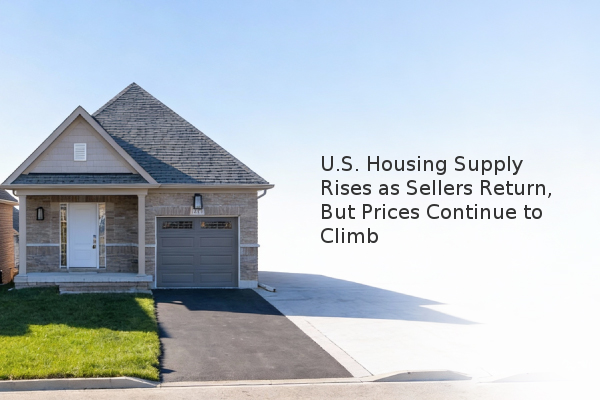
The U.S. housing market is showing tentative signs of rebalancing as more sellers list their homes, but the increase in supply is not yet sufficient to slow the pace of home price growth. According to seasonally adjusted data from February 2024, new listings saw their most significant monthly jump in six months. However, with the median home sale price rising 6.6% year-over-year to $412,778—the largest increase since September 2022—affordability remains a primary challenge for buyers. This analysis breaks down the key trends, explaining what the rising supply means for buyers and sellers in the current market.
The primary driver behind the recent uptick in listings is the easing of the "lock-in effect." This term refers to the phenomenon where homeowners are reluctant to sell because they would have to give up their existing, ultra-low mortgage rate and secure a new loan at a significantly higher rate. Over time, life events such as job changes or family needs compel moves regardless of financial incentives.
"Eventually, homeowners who have been holding on to their ultra-low mortgage rates simply have to move," according to a Redfin economics research lead. This gradual return of sellers is a positive development for buyers who have been competing for a limited pool of homes. In February, seasonally adjusted new listings rose 3.8% from January and were up 14.8% year-over-year, the largest annual gain since May 2021.
The rebound in supply is not uniform across the country. The most significant activity is concentrated in states that have been focused on new construction.
| Metro Area Highlights (Year-over-Year Change) | Biggest Increase | Biggest Decrease |
|---|---|---|
| New Listings | Austin, TX (44.6%) | Albany, NY (-2.9%) |
| Active Listings | Cape Coral, FL (60.6%) | Raleigh, NC (-24.4%) |
| Median Sale Price | Newark, NJ (16.5%) | San Antonio, TX (-4.2%) |
A critical point for buyers to understand is that while supply is improving, it remains historically low. Both new and active listings in February were still far below pre-pandemic levels. This persistent imbalance between supply and demand continues to exert upward pressure on prices.
“The housing market is nothing like it was two years ago during the pandemic homebuying frenzy, but it’s better than it was last year. It’s coming back,” said a Redfin Premier agent in Seattle. “There still aren’t enough listings to quench pent-up buyer demand.” This competition is evident in the number of homes selling above their list price, with markets like San Jose (65.3%) and Rochester (62.8%) seeing the highest shares.
Mortgage rates play a crucial role in buyer hesitation. After a brief drop in December, the average 30-year-fixed mortgage rate ticked up to 6.78% in February. This increase contributed to a slide in mortgage-purchase applications. With recent inflation data coming in higher than anticipated, it is likely that elevated mortgage rates will persist for the foreseeable future, impacting purchasing power.
Based on the February 2024 data, the market presents a nuanced picture.
The overall trend suggests a slow march toward a more balanced market, but for now, high costs and limited supply continue to define the U.S. housing landscape.