Browse

Log in / Register
 Share

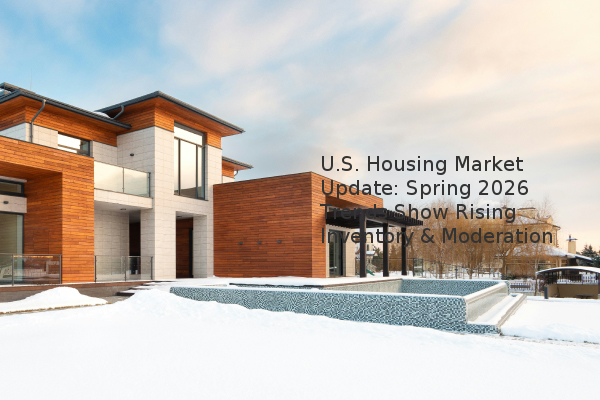
The U.S. housing market in spring 2026 is defined by a significant increase in the number of homes for sale, providing more options for buyers who have been sidelined by affordability challenges. While the overall supply of homes has reached its highest level in seven years, it remains below pre-pandemic benchmarks. This dynamic has led to a moderation in the pace of sales and modest price growth, creating a more balanced environment where buyers have more time to make decisions and sellers are motivated to price competitively.
Active housing inventory has seen a substantial increase compared to recent years. Based on our experience assessment of current market data, the number of homes listed for sale has surpassed one million, a threshold not consistently crossed since before the pandemic. This represents a significant shift from the extreme shortages seen in the early 2020s. However, it is crucial to understand that supply levels are not uniform across the country. The Midwest and Northeast, for example, continue to experience more pronounced shortages compared to other regions, indicating that market conditions are highly localized despite national trends.
Persistent affordability challenges continue to influence buyer behavior. Economic factors, including mortgage interest rates and broader economic uncertainty, have resulted in softer buyer demand relative to the increased supply. This means that while there are more homes to choose from, many potential buyers are proceeding with caution. This divergence between rising inventory and cautious demand is a key characteristic of the 2026 spring market. Consequently, the typical home is spending slightly more time on the market than it did a year ago, giving serious buyers a less frantic environment in which to operate.
The national median list price—the middle point of all homes listed for sale—has shown a slight increase. This modest growth is the most significant annual gain in over a year, suggesting that prices are stabilizing rather than falling dramatically. The continuing relative scarcity of homes in many areas has prevented widespread price declines. To attract buyers in this climate, a growing share of sellers are implementing price reductions. This strategy indicates that motivated sellers are adapting to market conditions by adjusting their pricing expectations to facilitate a sale.
The pace of the housing market has noticeably slowed compared to the intense seller's market of the pandemic era. Data indicates that homes are taking several days longer to sell than they did in the spring of 2025. This deceleration is a return toward a more traditional, pre-pandemic market rhythm. For buyers, this translates to more time for home tours, inspections, and negotiations without the pressure of immediate competing offers that were common in previous years. The market, while cooler, still moves faster than it did before 2020, but the frantic pace has subsided.
For buyers in 2026, the increased inventory and slower market pace provide a critical advantage: the ability to conduct thorough due diligence. This includes securing mortgage pre-approval, ordering detailed home inspections, and comparing multiple properties without feeling rushed. For sellers, success hinges on realistic pricing and readiness to negotiate; homes priced correctly from the outset are still moving efficiently. The overarching trend is a move toward balance, offering predictable opportunities for both parties engaged in a real estate transaction.