Browse

Log in / Register
 Share

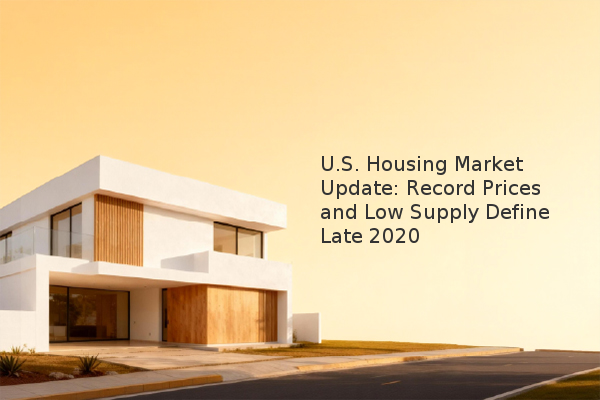
The U.S. housing market in late 2020 was characterized by a significant imbalance between strong buyer demand and a severe shortage of homes for sale, leading to record-high sale prices and intense competition. Home sale prices reached a new median record of $322,148, a 15% annual increase, while the number of active listings fell to an all-time low. This combination of high demand and limited supply created a fiercely competitive environment for buyers, with homes selling quickly and very close to their asking price.
The primary driver of soaring home prices is a fundamental economic principle: high demand met with low supply. Pending home sales were up 29% year-over-year, indicating a robust pool of buyers actively seeking properties. This sustained demand is largely attributed to historically low mortgage rates, which fell to 2.72% in mid-November, making borrowing more affordable. Conversely, the supply of available homes was constrained. Active listings (the total number of homes for sale) fell 29% from 2019 levels, hitting a new record low. While new listings increased by 7% annually, this growth was insufficient to replenish inventory being rapidly purchased. This severe shortage of homes for sale gives sellers a significant advantage, allowing them to command higher prices.
| Market Metric (4-week period ending Nov. 15) | Year-over-Year Change |
|---|---|
| Median Home Sale Price | +15% (to $322,148) |
| Pending Home Sales | +29% |
| New Listings | +7% |
| Active Listings (vs. 2019) | -29% |
The market conditions in November 2020 created an exceptionally competitive landscape for homebuyers. The average sale-to-list price ratio climbed to 99.5%, an all-time high, meaning homes were selling, on average, for just half a percent below their final asking price. This indicates that successful buyers often had to make offers at or very near the list price. Furthermore, homes were selling at a remarkable speed. 43% of homes that went under contract had an accepted offer within the first two weeks on the market. This measure of market velocity had held at elevated levels since summer, only beginning to show a slight seasonal decline in November. For buyers, this meant needing to be prepared to act quickly with a competitive offer.
Based on the data and typical seasonal patterns, the market was showing early signs of a slight slowdown while remaining strong overall. The Redfin Homebuyer Demand Index, while still 35% above pre-pandemic levels, was beginning to show a decline in home tours, which is typical for the holiday season. As Redfin chief economist Daryl Fairweather noted, "buyers who remain in the market may start to encounter less competition than we’ve grown accustomed to since the summer." However, this was expected to be a temporary seasonal lull rather than a market reversal. The underlying factors of low mortgage rates and a structural housing shortage suggested that the market would likely return to a fast pace in the new year.
For sellers, the current environment presents a strong opportunity to list a property, given the record-high prices and low inventory. For buyers, patience and preparation are key; getting pre-approved for a mortgage and being ready to move quickly on a property are essential strategies in a competitive market. While competition may lessen slightly during the winter holidays, the fundamental supply and demand imbalance is expected to persist, making early preparation for the 2021 market a prudent step.