Browse

Log in / Register
 Share

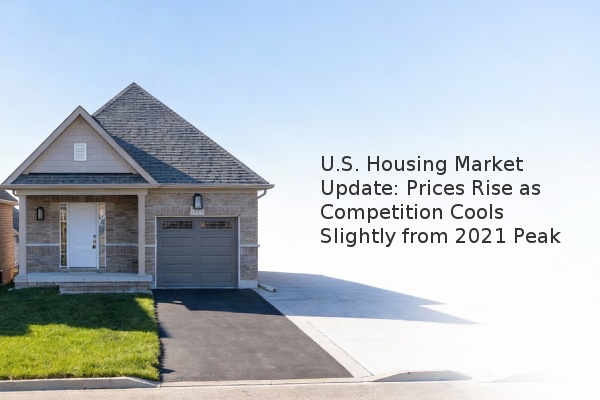
The U.S. housing market remains firmly in sellers' territory, with the median home sale price up 16% year-over-year to $361,225. However, key indicators show the extreme frenzy of early 2021 is cooling. While pending sales are still 10% higher than last year, a growing share of sellers—now 5.1% each week—are reducing their asking price, signaling a slight shift toward a more balanced market. The average home is selling for 1.6% above its list price, a figure that has declined from its July peak.
Based on our experience assessment, the data confirms that sellers continue to hold significant advantage. The median home sale price has increased 16% from a year ago, demonstrating sustained high demand. A key metric, the sale-to-list price ratio, which measures how close the final sale price is to the last asking price, remains above 100% at 101.6%. This means that, on average, homes are still selling for more than their list price. Furthermore, over half of all homes (52%) are selling above their asking price, a substantial increase from the 32% rate seen the previous year. This competitive environment is driven by a continued shortage of available homes; active listings are still down 23% from 2020 levels.
The increase in price drops to a weekly rate of 5.1% does not indicate a market crash, but rather a normalization from unsustainable peaks. During the height of the buying frenzy in the spring, some sellers may have set overly ambitious initial asking prices. As the market settles into a more predictable rhythm, price adjustments are becoming a common strategy to attract buyer attention. This is supported by data showing the pace of sales has slowed slightly; the median time a home spends on the market has increased to 18 days from its record low of 15 days in June. This slight cooling offers buyers a small window of opportunity for more deliberate decision-making.
Overall homebuying demand remains robust. Pending home sales are up 10% compared to the same period last year, and buyer demand indices have reached their highest point since April. This persistent demand, coupled with a limited supply of new listings (which are nearly flat year-over-year), continues to put upward pressure on prices. Low mortgage rates, which were at 2.86% for a 30-year fixed-rate loan according to the data, continue to motivate buyers despite rising prices. The data suggests that buyers, facing limited alternatives, are re-entering the market after a brief seasonal slowdown.
For those navigating the current market, the data points to several actionable insights: