
Browse

Log in / Register
 Share
Share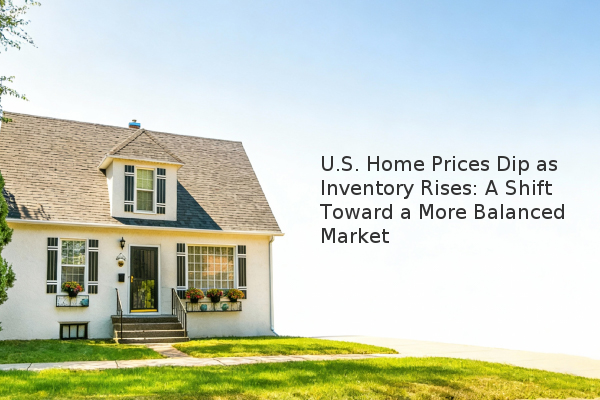
For the first time since mid-March, the U.S. housing market is showing clear signs of a shift toward buyers. The national median home listing price has decreased by 1.1% compared to a year ago, while the number of homes for sale has surged to its highest level since December 2019. This combination of softening prices and expanding inventory is creating more favorable conditions for prospective buyers, though persistent affordability challenges and elevated mortgage rates continue to temper demand.
This analysis is based on the latest Weekly Housing Trends Report and other recent industry data, all from 2025, providing a current snapshot of market dynamics.
The recent 1.1% year-over-year decline in the median list price is a significant development after nine consecutive weeks of flat or rising prices. This indicates that sellers are adjusting their expectations in response to market pressures. While the median price per square foot saw a slight increase of 0.3%, this represents the slowest annual growth rate since September 2023, further confirming a cooling in buying demand.
For buyers, this price softening means slightly more negotiating power and a break from the intense bidding wars that characterized the market in recent years. However, it's crucial to view this within the broader context of affordability. With the average 30-year fixed-rate mortgage—a loan used to purchase a property—edging up to 6.86%, the monthly cost of homeownership remains high. Based on our experience assessment, buyers should focus on their long-term budget rather than short-term price fluctuations.
A key factor reshaping the market is the substantial increase in available homes. The overall number of properties for sale jumped by 29.7% year-over-year, marking the 80th consecutive week of growth. Crucially, fresh listings—homes newly placed on the market—increased by 8.2%, suggesting growing seller confidence and activity.
This surge in inventory translates to more choices for buyers. Data indicates there were over one million homes for sale, a level not seen in over five years. This growth is largely attributed to a buildup of pent-up seller demand and a market that is normalizing after the extreme imbalances of the pandemic era, when homes sold in roughly 33 days. In May 2025, the typical home spent about 50 days on the market, giving buyers more time to make considered decisions.
Despite the significant gains, it is a misconception that the housing shortage is over. Housing supply remains well below pre-pandemic levels, particularly in the Midwest and Northeast regions. The current inventory growth is a move toward balance, but it does not fully compensate for the deficit of new construction over the past decade.
The market is best described as rebalancing rather than overflowing. Buyers will find more options than they did a year ago, but competition for well-priced, desirable homes in prime locations can still be expected. The expansion of supply is a positive trend, but its impact varies significantly by location.
Broader economic uncertainty continues to influence the market. According to an April 2025 report, nearly 80% of consumers believe it is a bad time to buy a home. While annual inflation has cooled to 2.3%, its lowest point in over four years, concerns about job security and personal finances are causing many prospective buyers to adopt a wait-and-see approach.
The Federal Reserve has signaled that interest rates may stay higher for longer, suggesting that a significant drop in borrowing costs is unlikely in the immediate future. This economic backdrop is a primary reason why housing activity is predicted to remain muted until there is a more meaningful reduction in either home prices or mortgage rates.
In summary, the current U.S. housing market presents a mixed picture for buyers and sellers. The key takeaways are:
Prospective buyers should use this period of increased inventory to carefully research options without feeling rushed, while sellers must price their homes competitively from the start to attract serious offers in a less frenzied environment.


