Browse

Log in / Register
 Share

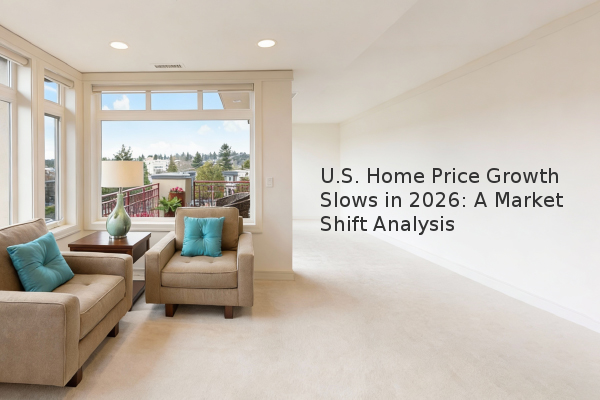
The latest data indicates a significant shift in the U.S. real estate market: the rapid acceleration of home price growth has begun to cool. In April 2026, the widely watched S&P CoreLogic Case-Shiller U.S. National Home Price NSA Index recorded a year-over-year gain of 5.5%, a slight decrease from the revised 5.6% increase in March. This deceleration, the first in several months, suggests that buyer fatigue from sustained high prices may finally be tempering the market's trajectory after prices reached a record peak in the latter part of 2025. For potential buyers and sellers, this signals a potential move towards a more balanced market.
What Does the S&P CoreLogic Case-Shiller Index Measure?
To understand this shift, it's crucial to know what the index represents. The S&P CoreLogic Case-Shiller Indices are a leading measure of the residential housing market in the United States, tracking changes in the value of single-family homes. Unlike a simple median price, this index uses a repeat-sales pricing technique to provide a more accurate view of market appreciation by comparing the sale prices of the same properties over time. The April 2026 data, covering the entire nation, points to a market that is still appreciating but at a more moderate pace. This cooling is not uniform, however, and is more pronounced in certain metropolitan areas that experienced the most aggressive growth in previous years. Based on our experience assessment, this index is a critical tool for gauging long-term trends beyond monthly fluctuations.
Why is Home Price Growth Slowing Down in 2026?
Several factors are contributing to this moderation. The primary driver appears to be affordability constraints. After years of steady price increases, coupled with higher mortgage interest rates compared to the historic lows of the early 2020s, a segment of buyers is being priced out of the market. This reduction in purchasing power leads to decreased demand, which in turn places downward pressure on price growth. Additionally, an increase in housing inventory in some regions provides buyers with more options, reducing the intensity of bidding wars that were common during the peak seller's market. While the economy remains strong, these market dynamics are creating a natural correction.
What Does This Market Shift Mean for Home Buyers?
For buyers who have been waiting on the sidelines, this cooling trend could present new opportunities. A slower pace of appreciation means prices may not be rising as quickly during your home search, reducing the pressure to make an immediate, high-pressure offer. You may have more negotiating power than in previous months, especially for properties that have been on the market for an extended period. However, it is important to remember that this is a slowdown in growth, not a price decline; homes are still gaining value, just at a more sustainable rate. Securing mortgage pre-approval remains a critical step to demonstrate seriousness in a competitive environment.
What are the Implications for Current Homeowners and Sellers?
Homeowners should view this data as a move towards market normalization rather than a cause for alarm. Equity continues to build, albeit more slowly. For sellers, pricing strategy becomes even more important. Overpricing a home based on the market peak of 2025 could lead to a prolonged time on the market. Working with a real estate agent to conduct a comparative market analysis (CMA) that reflects current 2026 conditions is essential for attracting serious buyers. A well-priced home in good condition is still likely to sell, but the era of extreme seller leverage may be waning in many areas.
The trajectory of home prices in the coming months will depend heavily on broader economic factors, including interest rate movements and employment data. While the April 2026 data suggests a cooling trend, the market remains fundamentally strong. Buyers should focus on affordability and long-term value rather than trying to time the market perfectly. Sellers are advised to price their homes competitively from the outset to capitalize on current demand. This shift towards moderation could ultimately lead to a healthier, more sustainable real estate environment for all participants.