Browse

Log in / Register
 Share


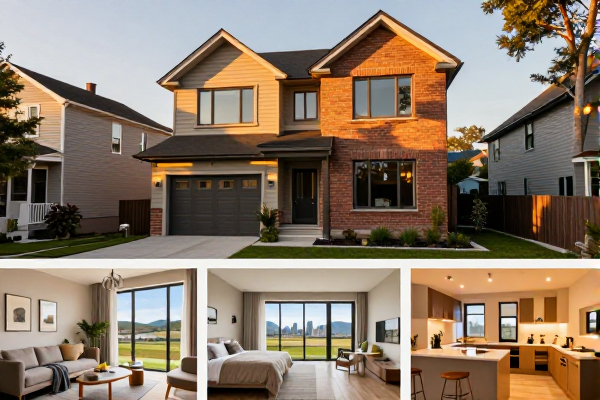
A two-story house offers distinct advantages in space efficiency and privacy, but also presents drawbacks like stair maintenance and higher utility costs. For families, the primary benefit is the clear separation of living and sleeping areas, a layout that remains highly sought-after in the 2026 real estate market. This article provides an objective analysis to help you determine if a two-story home aligns with your lifestyle and budget.
The core advantage of a two-story home is its efficient land use. By building vertically, you get more square footage on a smaller lot footprint compared to a single-story ranch home of the same total size. This often makes two-story houses a compelling value in densely populated suburban areas where land is at a premium. Furthermore, this vertical design naturally creates a zone separation, with common areas like the living room and kitchen typically on the first floor and private bedrooms on the second. This layout can significantly reduce noise transmission, offering greater privacy for occupants.
However, this layout introduces considerations for daily living. The presence of stairs is the most significant factor. While great for fitness, stairs can pose a challenge for young children, older adults, or individuals with mobility issues. It also complicates moving large furniture. From an energy efficiency perspective, two-story homes can experience temperature stratification, where the upper floor is noticeably warmer than the lower floor. This often requires a more sophisticated HVAC zoning system to maintain consistent comfort, which can lead to higher heating and cooling costs compared to a single-level home.
| Feature | Two-Story House | Single-Story House |
|---|---|---|
| Lot Footprint | Smaller | Larger |
| Zone Separation | High (Living/Sleeping) | Low (Open Layout) |
| Stair Access | Required | Not Required |
| HVAC Efficiency | Can vary by floor | Typically uniform |
What is the market demand for a two-story house in 2026? Current trends indicate steady demand, particularly from growing families who value the privacy and spatial division these homes provide. Resale value is generally strong, but it is highly dependent on the local market and the overall condition of the property. It is crucial to consider property taxes, which are typically assessed on the home's total square footage and value, not the number of stories. A larger two-story home will inherently have a higher tax assessment than a smaller one-story home.
For prospective buyers, a thorough home inspection is non-negotiable. Pay special attention to the structural integrity of the staircase, the condition of the roof (a larger surface area than a ranch home), and the effectiveness of the HVAC system. Evaluate the windows and insulation on the second floor, as these are key to managing energy costs. When considering a purchase, always review recent comparable sales ("comps") in the neighborhood with a real estate professional to ensure the asking price aligns with the 2026 market.
In conclusion, the decision to buy a two-story house hinges on a practical assessment of your household's needs. Weigh the benefits of space efficiency and privacy against the potential challenges of stairs and utility management. Prioritize a professional inspection to uncover any hidden issues with the structure or systems. Finally, base your offer on a clear understanding of local 2026 market data to ensure a sound investment.