Browse

Log in / Register
 Share

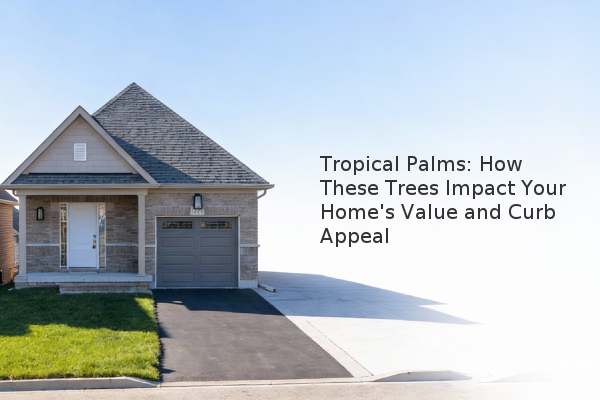
Integrating tropical palms into your landscaping can significantly boost your property's curb appeal and, by extension, its market value. These iconic trees create an immediate impression of a lush, desirable lifestyle, particularly in warmer climates. However, the financial benefit is not universal; it depends heavily on species selection, professional installation, and ongoing maintenance. This analysis examines the tangible impact of tropical palms on real estate, providing a data-driven perspective for homeowners and investors.
The value added by tropical palms is not a fixed amount but is influenced by the overall quality of your landscaping. Appraisers and real estate agents often use the principle of contributory value, where an improvement adds worth relative to the property's total value. A mature, well-maintained palm tree can be a significant asset. It enhances curb appeal, which is the attractiveness of a property when viewed from the street, making a critical first impression on potential buyers.
In markets like Florida, Arizona, and California, palms are often expected in higher-end properties. Their absence can make a home feel less complete. The key is maturity. A mature, healthy Canary Island Date Palm (Phoenix canariensis) can be a centerpiece worth thousands of dollars, while a small, newly planted specimen has minimal immediate financial impact. The investment is long-term, paying dividends when you decide to sell.
Not all palms are created equal in the eyes of a homebuyer. Species that are low-maintenance, disease-resistant, and aesthetically pleasing provide the best return on investment. Fast-growing species like the Queen Palm (Syagrus romanzoffiana) offer quicker gratification but may require more care. Slow-growing, iconic species like the Windmill Palm (Trachycarpus fortunei) or the Mexican Fan Palm (Washingtonia robusta) are often associated with higher value due to their stature and resilience.
It is critical to choose species appropriate for your USDA Hardiness Zone, a geographically defined area in which a specific category of plant life is capable of growing, based on climate conditions. Planting a palm not suited to your zone risks winter kill, which becomes a liability rather than an asset. Native or well-adapted species typically require less water and are more resistant to local pests, reducing long-term costs.
While the upside is clear, adding tropical palms comes with potential costs that can affect your home's bottom line. The initial expense includes the cost of the tree itself and professional installation, which is recommended for larger specimens to ensure root health and stability. Ongoing maintenance, including pruning, fertilization, and pest control, is an annual expense.
Furthermore, some species can pose risks. Large palms may interfere with power lines or, if poorly maintained, drop heavy fronds that could cause injury or property damage. In regions prone to hurricanes, certain tall, slender palms may be more susceptible to windthrow. These factors can raise insurance premiums or necessitate additional inspections during a real estate transaction. A pre-purchase inspection may include an assessment of large trees on the property.
| Landscaping Factor | Potential Impact on Value | Key Consideration |
|---|---|---|
| Mature, Healthy Specimen | Positive (5-15% boost to curb appeal) | Established trees offer immediate aesthetic benefit. |
| Poorly Maintained/Diseased | Negative | Becomes a detractor and a future cost for the buyer. |
| Inappropriate Species for Zone | Negative | High risk of death, seen as a poor investment. |
| Professional Landscape Design | Strongly Positive | Integrates palms cohesively into the overall property. |
For homeowners looking to maximize value, the strategy should be deliberate. Start with a consultation from a certified arborist, a specialist in the care of trees, to assess your soil, space, and climate. Focus on quality over quantity; one or two well-placed, specimen palms can be more effective than a dense, jungle-like grotto that may overwhelm the property or block views.
Proper placement is crucial. Use palms to frame the house, not hide it. They can be highly effective for creating shade near patios or for enhancing privacy along property lines. Ensure they are planted a safe distance from foundations, pools, and septic systems to prevent root-related issues down the line. Consistent, professional maintenance is the final key to preserving and growing the investment.
In summary, tropical palms are a powerful landscaping tool that can enhance property value when selected and maintained correctly. The most critical takeaways are to choose climate-appropriate species, invest in professional installation and care, and understand that the value is realized through significantly improved curb appeal over the long term.