Browse

Log in / Register
 Share
Share
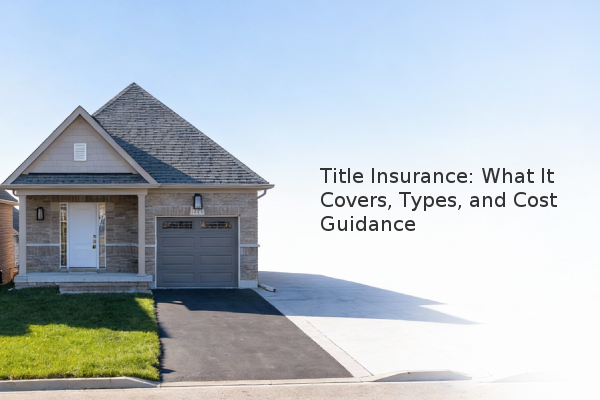
Title insurance is a one-time premium policy that protects real estate owners and lenders from financial loss due to defects in a property's title that existed before the purchase. Unlike other insurance that covers future events, it safeguards against past ownership issues. For most buyers, a lender's title insurance policy is required, while an owner's policy is a highly recommended, negotiable layer of protection. Understanding the different types of coverage, what they protect against, and who typically pays for them is crucial for a secure home purchase.
Title insurance is a form of indemnity insurance that shields mortgage lenders and homeowners from claims or lawsuits against the property's ownership history, known as the "title." Before closing, a title company conducts a search of public records to verify the seller’s legal right to transfer ownership and to identify any issues. The policy is designed to cover legal fees and costs if a problem missed during this search emerges later, such as an undiscovered heir claiming ownership or an old unpaid lien.
A title insurance policy provides a financial safety net for a range of title defects. Common covered claims include:
There are two distinct policies, each protecting a different party.
1. Lender's Title Insurance This policy is almost universally required by mortgage lenders. It protects their financial interest in the property until the loan is paid off. If a title claim voids your ownership, the lender's policy covers their investment. The buyer typically pays for this policy as a standard closing cost.
2. Owner's Title Insurance (Buyer's Title Insurance) This optional policy protects the homeowner's equity and legal right to the property. While not usually mandatory, it is strongly advised. Based on our experience assessment, the one-time premium is a worthwhile investment to avoid devastating legal expenses. In many transactions, the seller may pay for the owner's policy as part of the purchase negotiation.
The one-time premium for title insurance is paid at closing and generally ranges from $500 to $3,500 per policy. The cost is influenced by the property's location, purchase price, and the coverage level. In some states, like Texas and Florida, rates are set by the state, so shopping for a better price is not an option. In other states, it is possible to compare quotes from different title companies.
Customarily, the buyer pays for the lender's policy, and the seller may pay for the owner's policy. However, this is always negotiable in the purchase contract. When selecting a title company, seek recommendations from your real estate agent or lender and review the company's experience and client feedback. A warranty of title, a document in which the seller guarantees they have the right to sell, is an alternative sometimes used in cash purchases without lender requirements.
Navigating title insurance is a key step in the homebuying process. An owner's title insurance policy is a recommended safeguard for your investment, even if it's not required. The cost is a one-time fee that provides long-term peace of mind. Always clarify who is paying for each policy during offer negotiations. While a lender's policy protects the bank, only an owner's policy protects your financial stake in your new home.