Browse

Log in / Register
 Share
Share
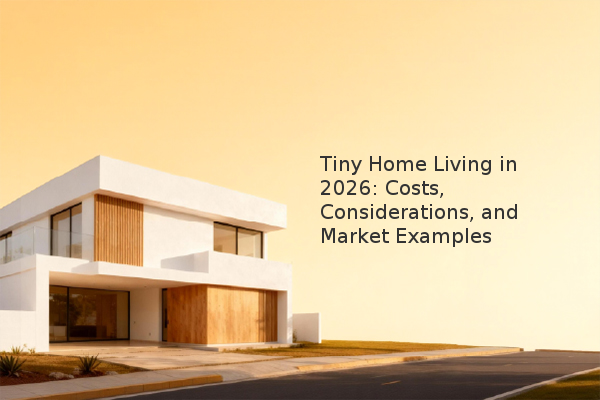
Tiny home living represents a significant shift toward minimalist, cost-effective, and environmentally conscious housing. A 2025 National Association of Home Builders poll indicated over half of American adults would consider a sub-600 square foot home, a trend continuing into 2026. This lifestyle offers potential savings on mortgages and utilities, but requires careful consideration of zoning laws, financing, and lifestyle adaptation. Based on our experience assessment, successful tiny home ownership hinges on understanding these key factors before investing.
The appeal of tiny homes extends beyond their novelty. The core advantages are financial and environmental. The significantly lower purchase price compared to a traditional single-family home reduces or eliminates a large mortgage. For example, prices in our 2026 market analysis range from $120,000 to $475,000, which is often below the median down payment for a standard house in many markets. This leads to lower property taxes and utility costs. Furthermore, the small footprint translates to a reduced carbon footprint, appealing to eco-conscious buyers. Many modern tiny homes also incorporate sustainable features like solar panels and rainwater collection systems, enhancing their green credentials.
Prospective buyers must navigate several important considerations. Zoning laws, which are local regulations governing land use, can be a major hurdle. Not all municipalities permit tiny homes on foundations or on wheels as primary residences, so verifying local codes is an essential first step. Financing can also differ; some lenders may treat these properties as personal property loans, which can have higher interest rates than traditional mortgages. It's also crucial to consider title insurance, a policy that protects the homeowner and lender against losses from disputes over property ownership. Finally, the lifestyle demands a significant downsizing of possessions and requires adaptable living habits for individuals or couples.
The market in 2026 is diverse, with options available across the United States, from rural retreats to urban infill lots. Here are examples illustrating the market's range:
These examples show that location, land size, and unique features heavily influence price and utility.
Financing a tiny home often requires more research than a standard home loan. If the home is on a permanent foundation and meets local building codes, you may qualify for a traditional mortgage. However, many buyers use alternative methods. A personal loan might be an option for lower-priced models, but interest rates can be higher. Some builders offer in-house financing. For those building on owned land, a construction-to-permanent loan or a home equity line of credit (HELOC) on the land could be viable paths. Consulting with a financial advisor familiar with alternative housing is recommended to assess the best option for your situation.
In conclusion, tiny home living is a viable path to homeownership in 2026 for those seeking affordability and sustainability. The decision requires thorough due diligence on zoning laws and financing options. Prospective buyers should prioritize viewing properties in person to assess the practicalities of the space. By focusing on your specific needs—whether as a primary residence, vacation home, or income property—you can determine if this minimalist lifestyle is the right fit.