Browse

Log in / Register
 Share

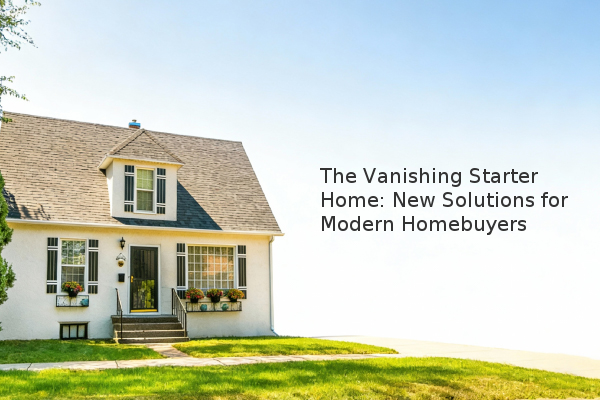
The traditional American starter home is largely unaffordable for most first-time buyers, replaced by innovative housing models that prioritize density, shared ownership, and creative infill development. Soaring prices, high mortgage rates, and stagnant wages have made single-family homes inaccessible, forcing a shift towards multi-generational living and new construction on small urban lots. This article explores the current market barriers and the emerging solutions, like those from Los Angeles's "Small Lots, Big Impacts" competition, that are redefining entry-level homeownership.
What is Causing the Starter Home Affordability Crisis?
The post-World War II era defined the starter home as a modest, single-family house affordable to a young family on one income. Today, that reality has vanished. According to recent data, in over half of the U.S., a typical starter home now costs $1 million or more. With current mortgage rates, a purchase requires a 20% down payment of $200,000 and a monthly payment of approximately $6,480. This level of expense is only feasible for households earning close to $250,000 annually. The primary drivers are a combination of rising home prices, stagnant wage growth, and restrictive zoning laws that limit new construction, creating a severe shortage of entry-level inventory.
How are Today's Buyers Adapting to the Market?
With traditional paths blocked, buyers are adopting alternative strategies to achieve homeownership. The National Association of Realtors (NAR) reports that first-time buyers now represent just 24% of the market, a historic low, with the average age rising to 36. A significant trend is the rise of multi-generational living; nearly 25% of adults aged 25-34 now live in multi-generational households, a sharp increase from 9% in 1971, according to Pew Research. For many, this is a financial necessity. Furthermore, more than a quarter of first-time buyers receive financial gifts from family, and an increasing number are purchasing homes with friends or extended family as co-buyers to pool resources.
What New Housing Models are Emerging?
In response, cities are championing new designs that maximize limited space. Los Angeles's "Small Lots, Big Impacts" design competition recently challenged architects to create solutions for small, underutilized city-owned lots. The goal was to design scalable, multi-family housing that is dense, sustainable, and affordable. The winning concepts move beyond the single-family home model without sacrificing privacy or ownership.
What is Infill Development and Why Does it Matter?
These new models rely on infill development, which is the practice of building on vacant or underused parcels within existing urban areas. For a city like Los Angeles, known for sprawl, this is a major shift. Infill development utilizes small lots, often between 2,500 and 5,000 square feet, bypassing the need to expand city infrastructure. This approach is more sustainable, as it leverages existing roads, sewers, and public transit, reducing car dependency and carbon emissions. Crucially, well-designed infill projects blend into existing neighborhoods, often facing less community opposition than large-scale new developments. The best infill development is additive, not disruptive.
What is the Practical Outlook for Buyers?
The City of Los Angeles plans to use the winning designs as templates, issuing Requests for Qualifications (RFQs) to developers to build on 10 city-owned parcels. This signals a tangible move toward making these concepts a reality. For prospective buyers, the path forward involves:
The future of starter homes will be defined by creativity and efficient land use, not by white picket fences. While the market challenges are significant, these innovative approaches offer a viable path to homeownership for the next generation.