Browse

Log in / Register
 Share
Share
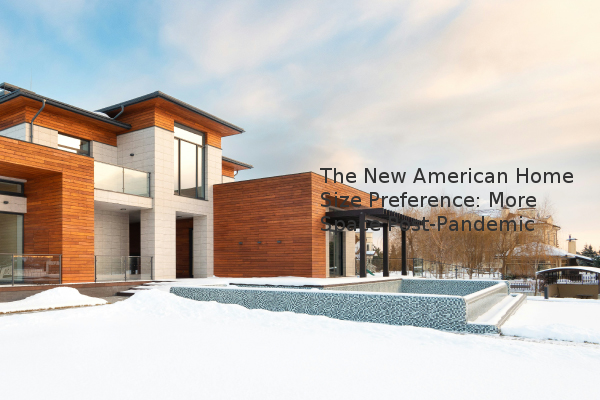
The COVID-19 pandemic has fundamentally reshaped American housing preferences, driving a significant and lasting demand for larger homes. Based on our experience assessment, the desire for additional square footage—primarily for dedicated home offices and multi-generational living—is now a central factor in home buying decisions, supported by a sustained trend towards functional space over sheer size.
The prevailing trend is a move away from ultra-compact urban living towards single-family homes that offer more functional space. The median size of a newly built single-family home (the middle value in a list of all new home sizes, indicating a typical size) has seen a notable increase. This shift is less about a return to the massive "McMansions" of the past and more about a strategic upgrade to homes that better suit new lifestyles. Buyers are increasingly seeking properties between 2,500 and 3,500 square feet, which provide room for home offices, gyms, and flexible living areas without the excessive upkeep of a much larger property.
The catalyst for this change was the pandemic, which forced families to spend unprecedented time indoors. As millions adapted to remote work and virtual schooling, the limitations of smaller apartments and condos became apparent. Key drivers include:
Buyers are not necessarily seeking to double their living space. Instead, the trend involves a pragmatic increase. A common scenario is a move from an 800-square-foot urban condo to a 1,500 to 2,000-square-foot suburban home. Others are adding 500 to 1,000 square feet to their existing homes through renovations or additions, such as finishing a basement or building a dedicated office. The goal is functionality and price, not simply maximum size. This data can be illustrated by the following comparison of common purchase patterns:
| Purchase Scenario | Pre-Pandemic Typical Size | Post-Pandemic Target Size | Primary Driver |
|---|---|---|---|
| First-time Buyer Upgrade | 800-1,200 sq. ft. (Condo) | 1,500-2,200 sq. ft. (House) | Home office, outdoor space |
| Move-up Buyer | 2,000-2,500 sq. ft. (House) | 2,800-3,500 sq. ft. (House) | Multi-generational living, dedicated rooms |
Yes, the demand for larger homes is strongly linked to an increase in multi-generational living. The pandemic prompted many families to combine households, with adult children moving back home and elderly parents leaving congregate care facilities. This requires homes with additional bedrooms, separate living areas, or even accessory dwelling units (ADUs). Combining resources allows families to afford a larger, more comfortable property that meets everyone's needs, a trend that is expected to persist.
Based on current indicators, the preference for more space is not a temporary fad. While the extreme lockdowns have eased, the structural changes to work culture are enduring. The widespread adoption of hybrid or fully remote work models means the home must permanently serve more functions. While the 5,000-square-foot McMansion may not become the norm again, the market is being driven by people looking for the right combination of functionality and price. This suggests a permanent correction in what buyers consider a "right-sized" home.
In conclusion, the key takeaway for buyers and sellers is that the market now highly values functional space. For sellers, highlighting a home's office potential, flexible rooms, and layout efficiency is crucial. For buyers, prioritizing a layout that accommodates work, life, and potentially family under one roof is a sound strategy. The post-pandemic American dream has been recalibrated to emphasize practical, comfortable living space over minimalism or sheer extravagance.