Browse

Log in / Register
 Share
Share
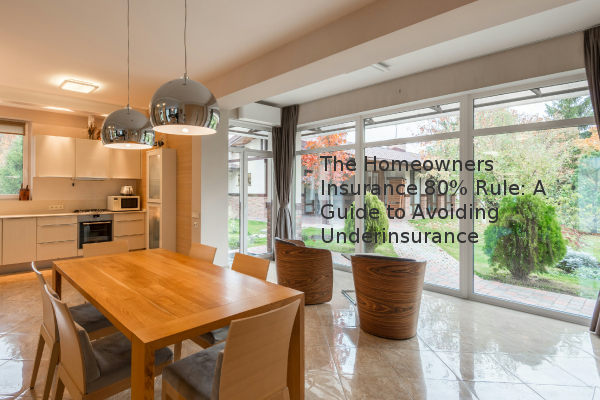
To adequately protect your home, your insurance coverage should meet or exceed 80% of your home’s replacement cost—the total amount it would take to rebuild your home from the ground up at current construction prices. Falling below this threshold can lead to significant financial penalties on claims. This article explains the 80% rule, how to accurately calculate your home's replacement cost, and why inflation and climate risks make this an annual essential review.
What is the 80% Rule in Homeowners Insurance?
The 80% rule is a common clause in homeowners insurance policies that stipulates you must carry coverage equal to at least 80% of your home’s replacement cost to receive the full value of a claim. If you are underinsured and file a claim, your insurer may only pay a proportionate amount of the loss. For example, if your home’s replacement cost is $500,000, you need at least $400,000 in dwelling coverage. If you only have $300,000 in coverage (60%), a $50,000 claim for roof damage might only result in a payout of $31,250, based on the formula: (Amount of Coverage Carried / 80% of Replacement Cost) x Amount of Loss.
How Do You Calculate Your Home’s Replacement Cost?
Replacement cost is not the same as your home's market value or what you paid for it. It is an estimate of the expenses to rebuild your home with materials of similar kind and quality. Key factors include:
The most accurate method is a professional appraisal. However, you can get a reliable estimate by using online calculators from reputable sources or consulting with your insurance agent, who often uses industry-specific software. Relying on outdated figures is a primary cause of underinsurance.
Table: Common Factors Influencing Replacement Cost
| Factor | Impact on Replacement Cost |
|---|---|
| Home Size & Layout | Larger, complex homes cost significantly more to rebuild. |
| Local Construction Costs | Vary by region; urban areas are often more expensive. |
| High-End Finishes | Custom features like hardwood floors or granite counters increase cost. |
| Code Upgrades | Older homes may require updates to meet current building codes. |
Why Are Inflation and Climate Risks Complicating Coverage?
In the current economic environment, two major factors are rapidly increasing replacement costs, making the 80% rule harder to maintain passively.
How to Ensure Your Coverage Remains Adequate Year-Round
Maintaining adequate coverage is an active process. Based on our experience assessment, you should not simply renew your policy annually without review.
Ensuring you meet the 80% rule is the fundamental step to avoiding costly surprises after a disaster. Proactively managing your coverage by accounting for inflation and regional risks, and considering enhanced policy endorsements, provides robust financial protection for your most valuable asset.