Browse

Log in / Register
 Share

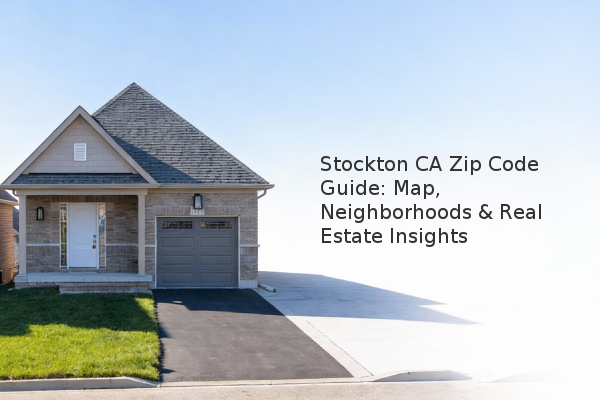
Understanding Stockton, California's zip codes is essential for navigating the city's diverse neighborhoods, postal services, and real estate market. This guide provides a clear breakdown of each zip code, its corresponding areas, and key characteristics to help you make informed decisions, whether you are moving, investing, or conducting business. Zip codes are numerical codes used by the United States Postal Service (USPS) to efficiently route and deliver mail. In real estate, they often correlate with school districts, property values, and community amenities.
Key Takeaways:
For anyone involved in a real estate transaction, the zip code is more than just an address identifier. It directly influences property search parameters on listing platforms. By filtering for a specific zip code, buyers can narrow down options to their preferred area. For sellers, understanding the zip code's market dynamics helps in pricing a home competitively. Additionally, property taxes—a recurring cost for homeowners—can be influenced by the specific tax rates and assessments within a zip code's boundaries. This information is vital for budgeting and long-term financial planning.
Stockton's zip codes radiate from the city center, encompassing a mix of urban, suburban, and industrial areas. The central downtown area and surrounding neighborhoods are primarily covered by 95202, 95203, and 95205. As you move north and east, zip codes like 95209 (Lincoln Village), 95210, and 95212 include more residential subdivisions with single-family homes. The western and southern parts of the city, including areas like 95206 and 95215, feature a blend of residential, agricultural, and industrial zones. The following table provides a snapshot of key zip codes and their general locations:
| Zip Code | Primary Area / Neighborhoods |
|---|---|
| 95202 | Downtown Stockton, Civic Center |
| 95203 | South Stockton, Airport Area |
| 95204 | West Stockton, San Joaquin Delta College |
| 95205 | Central Stockton, University of the Pacific |
| 95206 | Morada Area, North Stockton |
| 95207 | Boggs Tract, Port of Stockton |
| 95209 | Lincoln Village, Brookside |
| 95210 | Northeast Stockton |
| 95211 | Quail Lakes, Bear Creek |
| 95212 | Village Oaks, Spanos Park |
| 95215 | Weston Ranch, South Stockton |
| 95219 | Stockton Metropolitan Airport |
Beyond real estate, knowing your correct zip code is fundamental for everyday activities. It ensures reliable mail delivery, helps in setting up utilities, and is required for voter registration. When searching for local services or businesses, using the zip code filter provides more accurate and relevant results. For new residents, familiarizing yourself with the zip code map can help you quickly locate essential services like the nearest post office, shopping centers, and healthcare facilities. This practical knowledge simplifies the transition and integration into the Stockton community.
Real estate professionals often analyze market data by zip code to identify trends. Median home prices, average days on market, and price-per-square-foot can vary significantly from one zip code to another. For instance, based on our experience assessment, zip codes in North Stockton (e.g., 95209, 95211) may historically show different market dynamics compared to those in South Stockton. This granular view allows for more predictable assessments of property value appreciation and investment potential. It is important to consult recent market reports for the most current data, as these trends can shift.
In summary, leveraging Stockton's zip code system is a practical step for anyone engaging with the city's real estate market or community.