Browse

Log in / Register
 Share
Share
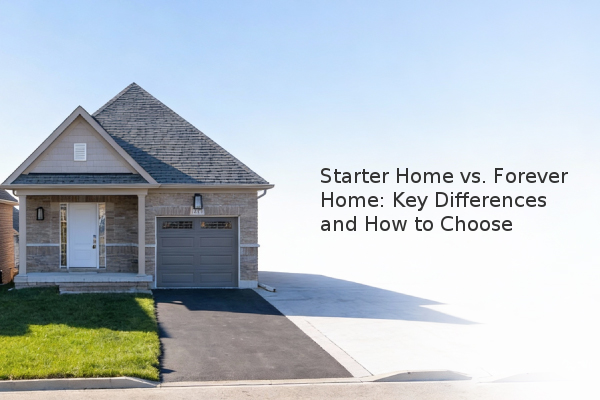
Choosing between a starter home and a forever home is one of the most significant financial and lifestyle decisions a buyer can make. The core difference is timeframe and purpose: a starter home is a short-to-medium-term investment to build equity, while a forever home is a long-term purchase focused on accommodating a family's evolving needs over decades. Understanding these distinctions is critical for aligning your purchase with your financial goals and lifestyle aspirations.
A starter home is typically a smaller, more affordable property that serves as an entry point into the real estate market. The primary goal is not perfection but building equity—the portion of the home you truly own—which can be used for a future purchase. This strategy is ideal for first-time buyers, young couples, or individuals who anticipate their income, family size, or needs will change within 5-10 years.
Key considerations for a starter home include:
Based on our experience assessment, a common pitfall is over-improving a starter home. Investments should be calculated to maximize Return on Investment (ROI) for resale, not to fulfill a long-term dream.
A forever home is purchased with the intention of living in it for many years, often through major life stages. This purchase shifts the focus from investment potential to long-term livability and personal satisfaction. Key features often include more space, a layout that can adapt to a growing family, and a location within a preferred school district or community.
When evaluating a forever home, buyers should conduct a more rigorous assessment:
Choosing a forever home is less about timing the market and more about finding a property that serves as a sustainable foundation for your life.
The financial approach for each home type varies significantly. For a starter home, the strategy is often aggressive, focusing on paying down the mortgage principal quickly to build equity. An FHA loan, which allows for a lower down payment, can be a useful tool for first-time buyers to enter the market.
| Financial Aspect | Starter Home | Forever Home |
|---|---|---|
| Primary Goal | Build Equity | Long-Term Stability |
| Down Payment | Often lower (3-5%) | Ideally 20% to avoid PMI |
| Mortgage Term | Often 30-year fixed | 15 or 30-year fixed |
| Investment Focus | Resale value in 5-10 years | Appreciation over 20+ years |
In contrast, financing a forever home prioritizes stability. A larger down payment (ideally 20%) avoids Private Mortgage Insurance (PMI), a monthly fee that protects the lender. locking in a low, fixed-rate mortgage for the long term is a common goal.
There is no right or wrong choice—only the choice that is right for your current situation. To make a confident decision, consider these actionable steps:
By tailoring your strategy to the specific type of home you are buying, you can achieve a more successful and satisfying homeownership experience.