Browse

Log in / Register
 Share
Share
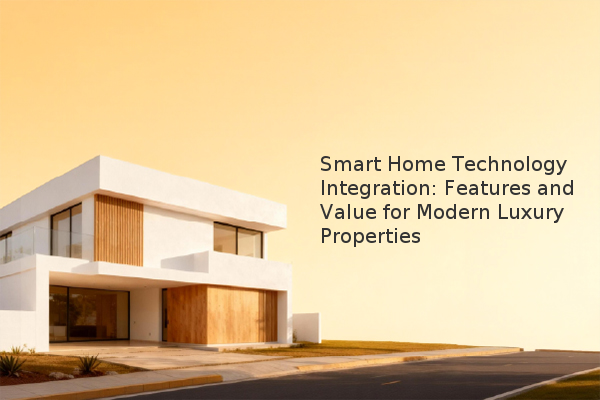
Integrating advanced smart home technology can significantly enhance the functionality, security, and market value of a luxury property. Based on our experience assessment, a fully automated home system controlling lighting, climate, security, and entertainment is becoming a central feature for high-end buyers. This article explores the key technological features, their practical benefits, and considerations for implementation in a luxury real estate context.
What are the core components of a high-end smart home system? A comprehensive smart home system integrates several key components to create a seamless living experience. Climate control can be managed remotely, allowing for the pre-setting of temperatures in specific zones like showers or pools. Lighting and sound systems are often automated or voice-activated through platforms like Siri or Alexa. Security infrastructure, including AI-powered cameras and automated shades, provides both safety and privacy. These elements are typically managed through a central control panel or mobile application, offering homeowners unified command over their property's environment. The primary benefit is the convenience of managing multiple systems from a single interface.
How does smart home technology impact property value and appeal? The inclusion of professionally installed smart home technology can positively influence a property's market appeal and perceived value. While the initial investment can be substantial, these features are often viewed as premium upgrades. Automated systems for energy management can lead to long-term cost savings, a attractive point for cost-conscious buyers. Furthermore, unique integrations, such as motorized cabinetry or retracting glass walls that blend indoor and outdoor living spaces, create a distinctive selling proposition that sets a property apart in a competitive luxury market. These features cater to a demand for convenience, security, and a modern lifestyle.
What should homeowners consider when planning a smart home integration? Planning a technological integration requires careful consideration of both current needs and future scalability. Choosing the right technology partners is critical; homeowners should seek integrators willing to experiment with custom solutions rather than offering only standardized packages. System interoperability is another key factor; ensuring that different devices and platforms (e.g., lighting, security, audio) can communicate prevents functional silos. It is also advisable to balance technology with natural elements. Properties that leverage smart technology to enhance, not dominate, the connection to natural surroundings—such as through floor-to-ceiling glass walls offering panoramic views—often achieve a more harmonious and sustainable luxury appeal.
Achieving a balance between high-tech convenience and natural design is the ultimate goal for modern luxury living. A successful integration enhances daily life without overwhelming the senses, creating a home that is both intelligently managed and warmly inviting. The key takeaway is that technology should serve the homeowner's lifestyle, not define it. Prospective buyers are increasingly looking for this sophisticated equilibrium in high-value properties.