Browse

Log in / Register
 Share

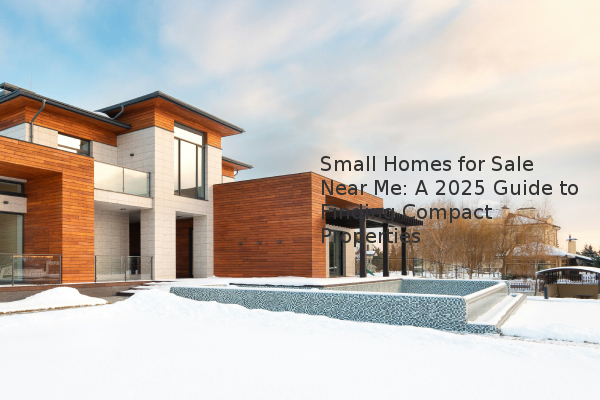
For prospective buyers, the search for small homes for sale near me often centers on affordability, lower maintenance, and a simplified lifestyle. The core advantage of purchasing a compact property is the significant reduction in both upfront cost and long-term expenses, making homeownership more accessible. This guide provides a strategic approach to finding and evaluating these properties in your local market.
The primary benefit is financial. Small homes, typically defined as properties under 1,200 square feet, command a lower purchase price and come with associated savings. Your mortgage payments, property taxes, and utility bills will generally be lower than for a larger home. Furthermore, maintenance—such as roofing repairs, painting, and landscaping—requires less time and money. This efficiency appeals to first-time homebuyers, empty-nesters looking to downsize, and investors seeking rental properties with a lower entry point. It's a practical step towards building equity without the financial strain of a larger property.
A targeted search strategy is crucial. While online portals are a starting point, use their advanced filters to set specific maximum square footage, such as 1,000 or 1,200. However, do not rely solely on digital tools. Based on our experience assessment, driving through neighborhoods you're interested in can reveal "For Sale by Owner" signs that may not be listed online immediately. Additionally, building a relationship with a local real estate agent who understands your goal can provide access to off-market opportunities. Specify that you are looking for bungalows, cottages, or specific floor plans like two-bedroom, one-bathroom layouts to focus the search.
When you tour a small home, prioritize the quality of the space over the quantity. Check for intelligent layout and storage solutions, such as built-in shelving or multi-functional rooms. Inspect the core systems thoroughly: the age and condition of the roof, HVAC (Heating, Ventilation, and Air Conditioning), and water heater are critical, as replacing them represents a major expense regardless of home size. Assess the natural light and flow of the rooms; a well-designed small home will feel open and comfortable, not cramped. Pay close attention to any signs of water damage or foundational issues, as these repairs can be disproportionately costly in a lower-priced home.
Beyond the listing price, factor in all closing costs. This includes fees for a home inspection, title insurance (a policy that protects you and your lender from losses related to the property's legal ownership history), and lender origination charges. It's wise to get pre-approved for a mortgage to understand your exact budget. The following table illustrates a simplified comparison of ongoing monthly costs between a small home and a median-sized home, assuming the same location.
| Expense Category | Small Home (Est.) | Median-Sized Home (Est.) |
|---|---|---|
| Mortgage Payment | $1,200 | $1,800 |
| Property Taxes | $250 | $450 |
| Home Insurance | $80 | $120 |
| Average Utilities | $150 | $280 |
| Total Monthly | $1,680 | $2,650 |
The most common challenge is limited space, which may not accommodate a growing family or extensive hobbies. Resale value can also be a consideration; while small homes are in high demand in many urban areas, their appreciation rate might differ from larger homes in the same neighborhood. Ensure the location offers the amenities you need, as the convenience of the neighborhood becomes even more important when your living space is compact. Always invest in a professional home inspection to avoid unexpected issues.
To successfully purchase a small home, focus on a strategic local search, a thorough inspection of the property's condition, and a clear understanding of all financial obligations. This approach will help you secure a property that aligns with a cost-effective and manageable lifestyle.