Browse

Log in / Register
 Share

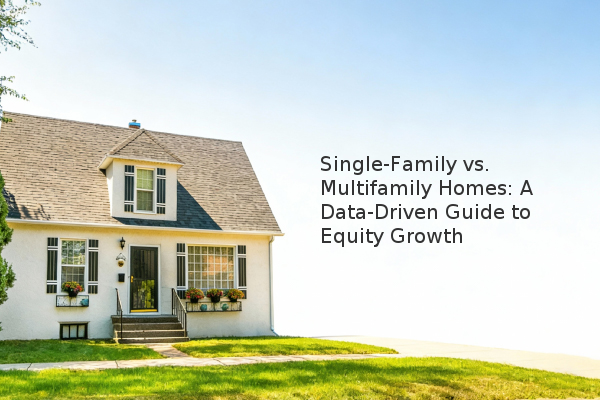
For real estate investors, multifamily properties (buildings with 2-4 units) currently present a stronger opportunity for accelerated equity growth compared to single-family homes, based on recent market data and income potential. While single-family homes have traditionally been the cornerstone of the American dream, shifting affordability and living trends are reshaping investment dynamics. This analysis, grounded in 2023-2024 market data, will help you align your investment strategy with today’s realities by examining key financial metrics.
Equity—the difference between your property’s market value and the mortgage balance owed—builds through two primary channels: market appreciation and loan paydown. Single-family homes typically rely more on market appreciation, where value increases are tied to broader economic conditions. Conversely, multifamily properties offer the advantage of "forced appreciation," where investors can actively increase the property's value by raising income (rents) and optimizing operations.
The recent data underscores a shift. According to ATTOM's Year-End 2023 U.S. Home Sales Report, while single-family home price appreciation has slowed from its peak, multifamily properties have shown more consistent growth due to high rental demand. This is particularly true for properties with two to four units, which benefit from residential financing while generating multiple income streams.
| Investment Metric | Single-Family Home | Small Multifamily (2-4 Units) |
|---|---|---|
| Primary Equity Driver | Market Appreciation | Forced Appreciation & Cash Flow |
| Typical Down Payment | 15-25% | 20-25% (on the total property value) |
| Income Potential | Single rental stream | Multiple rental streams, diversifying risk |
| Impact of Vacancy | 100% loss of rental income | Partial loss (e.g., 50% for a duplex) |
The decision often comes down to your investment goals, capital, and risk tolerance. Cash flow—the net income after all expenses and mortgage payments—is a critical differentiator. A well-chosen multifamily property can generate positive cash flow from day one, which can be reinvested to pay down the mortgage principal faster, directly building equity.
The rise of multigenerational living—where multiple generations of a family live under one roof—is creating demand for adaptable housing layouts. This trend benefits both property types but in different ways. For single-family homes, features like in-law suites or separate entrances are becoming high-value additions. For multifamily investors, this trend signals sustained rental demand from larger family units, potentially reducing vacancy rates.
Homes with flexible layouts that can accommodate these changing needs may see long-term appreciation that outperforms less versatile properties. For an investor, this means considering a property's adaptability as a factor in its potential for sustained value growth, regardless of whether it is a single-family or multifamily asset.
To make a strategic investment choice: evaluate your local market's rent-to-price ratios, calculate all potential expenses meticulously, and consider your personal involvement level. A single-family home might be ideal for a hands-off investor banking on long-term appreciation, while a small multifamily property offers a proactive path to wealth building through direct value-add strategies and stronger cash flow. Based on our experience assessment, consulting with a local real estate agent who specializes in investment properties can provide crucial, hyper-local data to inform your final decision.