Browse

Log in / Register
 Share

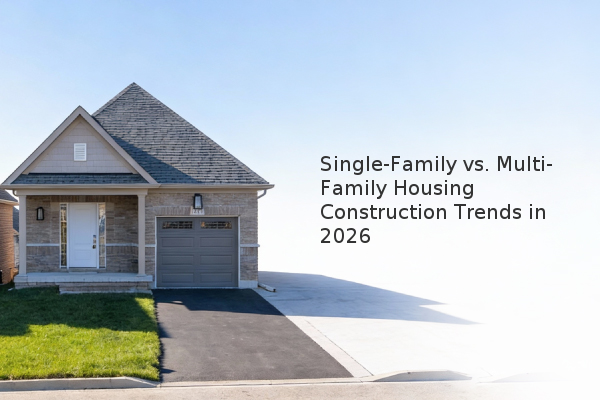
The shift from multi-family to single-family home construction continues in 2026, but the pace has slowed significantly. This trend is now driven more by a stagnation in multi-family building than a strong surge in single-family construction. Based on our experience assessment, this dynamic suggests continued pressure on housing inventory, likely sustaining price growth and affordability challenges, while simultaneously reducing the risk of a construction-led downturn in the next economic cycle.
Housing starts are a key economic indicator referring to the number of new residential construction projects that have begun. Data from the U.S. Census Bureau shows a clear divergence between housing types. Single-family starts have maintained a steady upward trajectory, showing a consistent increase over recent years. In contrast, multi-family starts have experienced a notable decline, settling back towards the long-term levels seen before the last economic expansion. This indicates that builders are responding to market demand for more standalone homes, though the growth is measured.
The monthly data can be volatile, but the long-term trend is unmistakable when viewed through a seasonally adjusted annual rate (SAAR). This metric smooths out seasonal variations to project an annual pace, providing a clearer picture of the underlying market direction. The sustained strength in single-family starts points to a fundamental demand for this type of housing.
While housing starts show a clear trend, building permits—which are authorization to begin construction—act as a leading indicator. Here, the story becomes more nuanced. The data indicates that the growth rate for single-family permits has leveled off. Meanwhile, permits for multi-family units have shown a recent uptick. This does not, however, signal a reversal of the broader shift.
Based on our experience assessment, the multi-family permit activity remains within the range of normal fluctuation observed over the past several years. Multi-family permits are inherently more volatile, often reflecting large, periodic projects. The current level of activity suggests a market finding a new equilibrium rather than embarking on a new boom. The key takeaway is that the shift toward single-family construction is continuing, but not accelerating.
The pattern observed in housing completions—the final step where a new home is ready for occupancy—generally confirms the trends in starts and permits. Completions ultimately determine the new supply entering the market. The current trajectory implies that the addition of new housing stock, particularly in the single-family segment, is unlikely to provide significant relief to the widespread inventory shortage.
This has direct implications for buyers and the market overall:
An interesting side effect of this "irrationally subdued" building pace is a potential increase in economic resilience. Historically, housing bubbles have been characterized by overbuilding. The current cautious approach from builders means that the sector is not over-extended. In the event of an economic recession, the construction industry is less likely to experience a severe crash because it has not built up excessive inventory. Instead, it may continue at a more stable pace, providing a baseline of support for the broader economy.
To navigate this market, potential buyers should focus on financial preparedness and patience, while investors should note the sector's relative stability. The trends suggest a market that is growing steadily, not recklessly, which may offer a buffer during future economic shifts.