Browse

Log in / Register
 Share
Share
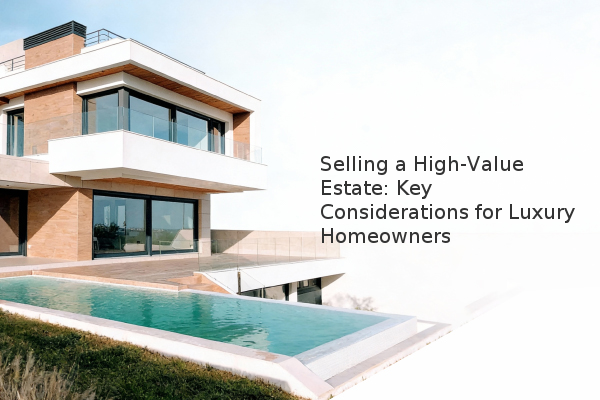
For homeowners considering the sale of a multi-million dollar property, the process involves distinct financial and strategic considerations compared to a standard residential transaction. The primary goal is to maximize return on a significant asset, which requires a meticulously planned approach focused on market positioning, professional staging, and targeted marketing to attract the right pool of qualified buyers. Success hinges on understanding the nuances of the luxury market and avoiding common, costly oversights.
What Defines the Luxury Real Estate Market? The luxury real estate market caters to properties in the top tier of their local market, often defined by unique features, prime location, and a price point that places them in the top 5-10% of homes for sale. Unlike standard homes, value is not solely determined by square footage or the number of bedrooms. Instead, it is driven by scarcity, architectural significance, premium amenities, and unparalleled views. For instance, a contemporary estate on 1.73 acres with direct ocean vistas in a premier location like Pebble Beach, California, exemplifies a luxury property. These homes appeal to a very small segment of buyers, necessitating a highly specialized marketing and sales strategy.
How Do You Accurately Price a Multi-Million Dollar Property? Setting the correct listing price is the most critical step. An overpriced home will stagnate, while an underpriced one leaves money on the table. Pricing must be based on a comprehensive comparative market analysis (CMA) conducted by an agent with proven luxury market expertise. This analysis goes beyond recent sales of similar-sized homes; it evaluates properties with comparable lot sizes, views, architectural pedigree, and unique amenities (e.g., a guest cottage, bocce court, or wine cellar). It also considers the property's history; for example, a home that sold for $12.5 million several years prior may see significant appreciation, but the new price of $17 million must be justified by market trends and capital improvements. Relying on automated valuation models (AVMs) is insufficient for high-value assets.
What Marketing Strategies Attract Qualified Luxury Buyers? Marketing a multi-million dollar estate requires a bespoke approach far removed from standard listings. The strategy should include:
What Are the Financial Implications of Selling a High-Value Home? The financial outcome is influenced by several factors beyond the sale price. Sellers must account for transaction costs, including real estate agent commissions, transfer taxes, and capital gains taxes. For a property held in a legal entity like an LLC (e.g., 8:28 California Properties LLC), the tax implications can be complex and require consultation with a tax advisor. Furthermore, understanding the net proceeds is essential for planning future investments, whether purchasing another property or diversifying a portfolio.
Key Considerations for a Successful Luxury Home Sale Selling a high-value estate is a significant undertaking. Based on our experience assessment, a successful outcome is predictable when you: