ok.com
Browse
Log in / Register

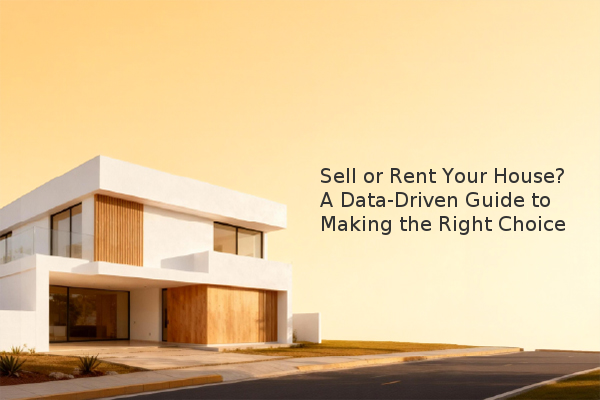
Sell or Rent Your House? A Data-Driven Guide to Making the Right Choice

12/09/2025

Deciding whether to sell your house or rent it out hinges on three core factors: your immediate financial needs, your long-term investment goals, and the conditions of your local real estate market. If you require the equity from your current home to fund your next purchase or are making a permanent move, selling is typically the best path. However, if you have a low mortgage rate, seek long-term passive income, and plan to potentially return to the home, renting it out may be the superior financial strategy.

What Are the Key Financial Questions to Ask?

Before making a decision, a clear assessment of your finances is essential. Start by asking these critical questions:

  • Can local rental income cover my costs? Research current rental rates for similar homes in your area. The rental income should ideally cover your monthly mortgage payment, property taxes (government levies on your property), homeowners insurance, and a reserve for maintenance. If rental demand is high, you may generate positive cash flow.
  • Do I need my home’s equity for a down payment? If you are buying another property and need the cash from the sale for a down payment, selling is often necessary. If you can afford the new down payment without tapping into your current home's equity, renting becomes a viable option.
  • What is the current state of the housing market? Analyze whether it's a seller's market (favoring sellers with high prices and fast sales) or a buyer's market. If prices in your area are peaking, selling maximizes immediate profit. If the market is slow but projected to grow, holding the property as a rental could yield a higher sale price later.

What Are the True Costs of Being a Landlord?

Renting your home transforms it into an income property, but it introduces ongoing expenses and responsibilities.

Common Landlord ExpenseEstimated Cost / Consideration
Maintenance & RepairsBudget 1-2% of the property's value annually for upkeep (e.g., HVAC, plumbing, structural issues).
Mortgage & HOA FeesThese recurring payments continue regardless of vacancy.
Landlord InsuranceThis specialized policy, covering rental-specific risks, typically costs about 15-25% more than standard homeowners insurance.
Vacancy & Tenant ScreeningCosts for advertising and background checks add up, and periods without a tenant mean covering the mortgage yourself.
Property Management (Optional)Hiring a company typically costs 8-12% of the monthly rent but handles tenant relations and maintenance coordination.

What Are the Upfront Costs of Selling Your Home?

Selling provides a lump sum of cash but involves significant one-time costs, which are deducted from your sale proceeds.

  • Real Estate Agent Commissions: This is often the largest cost, typically ranging from 5% to 6% of the final sale price, split between the buyer's and seller's agents.
  • Closing Costs: Sellers can expect to pay 1% to 3% of the sale price in closing costs, which may include transfer taxes, title insurance (insurance that protects against ownership claims), and attorney fees.
  • Repairs and Staging: To compete effectively, you may need to invest in pre-sale repairs and professional staging, which can cost several thousand dollars but often leads to a higher final sale price.

When Does a Rent-to-Own Agreement Make Sense?

A rent-to-own agreement can be a strategic alternative. In this arrangement, a tenant-buyer pays an option fee to secure the future right to purchase the home. A portion of their monthly rent is credited toward the down payment. This can be beneficial if the sales market is stagnant, as it provides rental income with a potential sale path. Based on our experience assessment, this works best when both parties have clear legal agreements outlining the terms.

Final Recommendations for Your Decision

The choice to sell or rent is highly personal. To make the best decision for your circumstances, focus on these actionable steps:

  • If you need immediate cash for a new home or are relocating permanently, prioritize selling.
  • If you have a low mortgage rate and the financial buffer to handle landlord expenses, consider renting for long-term wealth building.
  • Conduct a thorough analysis of your local housing and rental markets using recent data from sources like local real estate boards or the U.S. Census Bureau.
  • Objectively evaluate your tolerance for being a landlord, including the time commitment and potential for stressful situations.

Ultimately, your short-term needs and long-term financial goals are the most critical factors in determining whether to sell or rent your house.


Cookie
Cookie Settings
Our Apps
Download
Download on the
APP Store
Download
Get it on
Google Play
© 2025 Servanan International Pte. Ltd.