Browse

Log in / Register
 Share

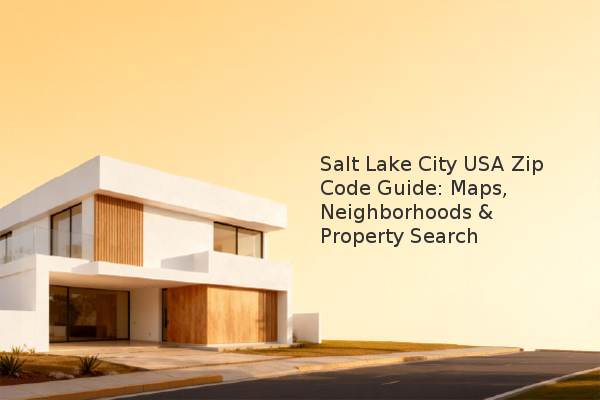
Understanding the Salt Lake City USA zip code system is fundamental for navigating the city's real estate market, from pinpointing property listings to assessing neighborhood characteristics. This guide provides a clear mapping of zip codes to their corresponding areas, explaining how this knowledge directly impacts your property search, mailing, and understanding of local amenities. Using the correct zip code ensures accurate property tax assessments and efficient delivery of important documents related to your transaction.
What is a ZIP Code and Why Does it Matter in Real Estate? A ZIP Code, an acronym for Zone Improvement Plan, is a system used by the United States Postal Service (USPS) to efficiently route mail. In real estate, a zip code transcends its postal function; it often defines market areas, influences property values, and determines school districts. When searching for a home, the zip code can be a primary filter on listing platforms, instantly narrowing down options to a specific sector of the city. Property taxes, which are levied by local counties and municipalities, are calculated based on the property's assessed value and the tax rates of its specific jurisdiction, which is closely tied to its zip code.
A Map of Salt Lake City's Key Zip Codes Salt Lake City is divided into several key zip codes, each with a unique identity. The downtown core is primarily covered by 84101 and 84111, encompassing the Central Business District and the Capitol Hill area. The popular residential neighborhoods of Sugar House and Harvard-Yale fall largely within 84105 and 84106. To the east, the foothill areas, including the Avenues (84103) and Federal Heights, are known for their views and historic homes. The 84108 zip code covers the University of Utah area and the eastern canyon mouths. Here is a quick reference table:
| Zip Code | Primary Neighborhoods | General Character |
|---|---|---|
| 84101 | Downtown CBD | Commercial, high-density residential |
| 84102 | West Downtown, Guadalupe | Mixed-use, evolving |
| 84103 | The Avenues | Historic, residential, walkable |
| 84105 | Sugar House (South) | Trendy, commercial hub, residential |
| 84106 | Sugar House (East) | Residential, parks |
| 84108 | University of Utah, Foothill | Academic, upscale, near nature |
Using Zip Codes for Accurate Property Search and Valuation For home buyers and investors, zip codes are a critical tool for comparative market analysis (CMA). By filtering recent sales data within a specific zip code, you can gauge the median home price and price-per-square-foot trends for that area. For example, properties in the 84108 zip code often command a premium compared to those in 84104 due to factors like proximity to the university and mountain access. Furthermore, when setting up utilities or updating your address with financial institutions after a move, providing the correct zip code is essential for uninterrupted service and ensuring bills and statements are correctly delivered to your new property.
Beyond the Mailbox: Zip Codes and Community Amenities Your zip code can also be a strong indicator of the lifestyle and resources available. It directly correlates with public school assignments from the Salt Lake City School District or Granite School District. Access to parks, recreational facilities, public transportation lines, and shopping centers can also vary significantly from one zip code to another. A zip code search can reveal demographic data and crime statistics, which are important factors for many families when choosing a new home. While these are general trends, it is always recommended to visit neighborhoods and verify specific property details.
Key Takeaways for Your Salt Lake City Search