Browse

Log in / Register
 Share
Share
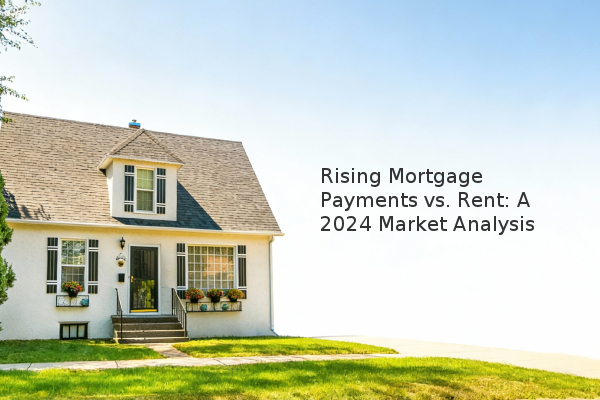
Rising monthly housing costs are reshaping decisions for Americans, with mortgage payments for new homebuyers increasing at twice the rate of asking rents. This dynamic is primarily driven by a rapid rise in mortgage interest rates, which is pricing many potential buyers out of the purchase market and consequently increasing demand for rentals. While the median U.S. asking rent hit a record high, the gap between the cost of renting and buying is narrowing at an unprecedented pace, creating a complex landscape for anyone considering a move.
The primary driver behind the surging cost of homeownership is the sharp increase in mortgage interest rates. In just a few months, rates climbed from historic lows below 3% to above 5%. For a homebuyer, this rate jump significantly increases the median monthly mortgage payment, which is the typical payment amount for a home purchased with a 5% down payment. When combined with record-high home sale prices, this creates a substantial financial barrier. Many prospective buyers are opting to continue renting, which in turn fuels rental demand and contributes to higher asking rents. However, the rate of increase for rents has not kept pace with the meteoric rise in ownership costs.
Recent industry data highlights the stark contrast between the two housing sectors. As of March, the national median asking rent rose 17% year-over-year to $1,940. Simultaneously, the national median monthly mortgage payment for new homebuyers soared 34% to $1,910.
The following table illustrates the metro areas experiencing the most significant rent increases during this period, demonstrating substantial regional variation.
| Metro Area | Year-Over-Year Rent Increase |
|---|---|
| Portland, OR | +40% |
| Austin, TX | +38% |
| New York, NY | +35% |
| Fort Lauderdale, FL | +33% |
| Miami, FL | +33% |
| Orlando, FL | +30% |
Conversely, only two major metro areas saw rents decline: Milwaukee, WI (-10%) and Kansas City, MO (-1.1%). This data reflects the costs for new leases and new mortgages during the specified period, not the average cost for all existing renters or homeowners.
This market presents a difficult choice. Based on our experience assessment, potential first-time buyers are faced with two primary paths. Choosing to rent may offer short-term flexibility and savings in expensive markets, but tenants must be prepared for the possibility of continued annual rent increases. On the other hand, buying a home in a more affordable area, while more expensive upfront than it was a year ago, allows a buyer to build equity over the long term and stabilize their monthly housing costs with a fixed-rate mortgage.
The key takeaway is the rapidly closing cost gap between renting and buying. While renting remains slightly more expensive on a national median basis, the higher and faster-growing mortgage payment is a significant factor. Your personal financial situation, long-term goals, and geographic flexibility are more critical than ever in this decision.