Browse

Log in / Register
 Share

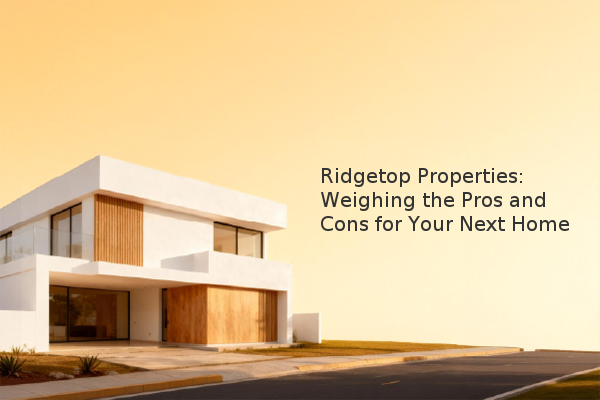
Purchasing a ridgetop property offers breathtaking views and unparalleled privacy, but it also comes with unique challenges such as access issues, higher insurance costs, and potential environmental vulnerabilities. Based on our experience assessment, these homes represent a specific lifestyle choice that requires careful due diligence beyond a standard real estate transaction. This guide outlines the key advantages and disadvantages to help you determine if a ridgetop home aligns with your goals and budget.
The primary allure of a ridgetop property is the panoramic view. Waking up to sweeping vistas can significantly enhance your daily living experience and is a major factor in the property's value. These homes also provide a high degree of privacy and seclusion, as they are typically situated away from dense neighborhoods. Furthermore, properties at higher elevations often benefit from better air circulation and fewer pests compared to low-lying areas. The sense of owning a unique, exclusive piece of land is a powerful draw for many buyers. It's important to note that while these benefits are substantial, they are often reflected in a premium asking price.
The very features that make ridgetop properties desirable can also lead to complications. Access is a critical consideration. The driveway leading to the home may be long, steep, and costly to maintain, especially in wintery or rainy conditions. You must assess the cost of paving, gravel, and snow removal services. Utility connections can be another hurdle; not all ridgetop parcels have easy access to municipal water and sewer, potentially requiring a well and a septic system, the latter involving a perc test (a soil evaluation to determine its suitability for a septic drain field). Additionally, homeowners insurance premiums can be higher due to increased exposure to wind and the potential for wildfire, depending on the region.
Investigating a ridgetop property demands a meticulous approach. A standard home inspection is just the beginning. You should strongly consider specialized inspections. A geotechnical engineer can assess the stability of the slope to rule out landslide risks. It is also crucial to verify water rights and access, particularly in arid western states. You must research local building codes and any CC&Rs (Covenants, Conditions, and Restrictions) that might limit future expansions or modifications. Confirming the legal status of the access road (e.g., a recorded easement) is essential to ensure you have a legal right to use it.
Key Considerations Table for Ridgetop Properties
| Factor | Why It Matters | Key Question to Ask |
|---|---|---|
| Access Road | Maintenance responsibility and winter accessibility. | Is the road privately maintained, and what are the associated costs? |
| Utilities | Cost and feasibility of connection. | Is the property connected to city water/sewer, or is a well and septic system required? |
| Insurance | Premiums and availability of coverage. | Can I secure affordable homeowners insurance, including wildfire and wind coverage? |
| Geological Stability | Risk of landslides or erosion. | Has a geotechnical survey been conducted to confirm the land's stability? |
| Environmental Factors | Exposure to sun, wind, and fire risk. | How does the elevation affect energy costs and exposure to natural elements? |
The resale market for a ridgetop home is inherently niche. While the right buyer may pay a significant premium for the views and privacy, the pool of potential buyers is smaller than for a typical suburban home. Factors that you considered during your purchase—like access, maintenance costs, and insurance—will also be evaluated by future buyers. Well-maintained properties with clear solutions to these challenges (e.g., a well-maintained road, proven stability) will hold their value best. The uniqueness of the property means its value is highly subjective and dependent on finding a buyer who values the specific lifestyle it offers.
Ultimately, a successful ridgetop property purchase hinges on thorough research and a clear understanding of the associated long-term responsibilities. Prioritize specialized inspections, secure detailed cost estimates for insurance and maintenance, and legally verify road and utility access. By acknowledging both the spectacular rewards and the practical realities, you can make an informed decision about pursuing this distinctive type of homeownership.