Browse

Log in / Register
 Share
Share
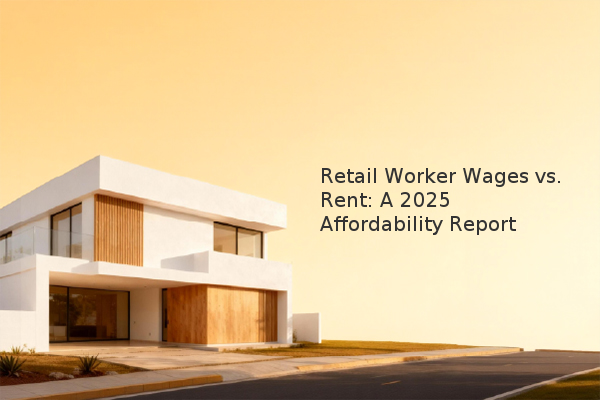
The typical U.S. retail worker earns $34,436 annually, which is 51.6% less than the income needed to afford the median-priced apartment. This significant gap means a retail employee would need to work an unrealistic 83 hours per week to afford a typical rental alone. While affordability remains severely strained, the situation has improved slightly from previous years due to rising wages and a cooling rental market, with the earnings shortfall varying dramatically by metropolitan area from Cleveland (32.9%) to New York (71%).
A common benchmark for rental affordability is that a household should spend no more than 30% of its gross income on rent. Based on this standard, a renter would need an annual income of $71,172 to comfortably afford the typical U.S. apartment, which has a median monthly rent of $1,779. For a typical retail worker earning $34,436 per year, this represents an annual earnings shortfall of $36,736. This analysis, conducted by real estate brokerage Redfin, uses 2024 wage data from the U.S. Bureau of Labor Statistics and October 2025 rent data.
While the affordability crisis is acute, data shows a slight improvement. The income shortfall for retail workers has decreased from 56.8% in October 2022 to 51.6% in October 2025. This positive trend is attributed to two key factors:
| Year | Earnings Shortfall for Typical Retail Worker |
|---|---|
| October 2022 | 56.8% |
| October 2023 | 54.2% |
| October 2024 | 52.2% |
| October 2025 | 51.6% |
The affordability gap is not uniform across the United States. It is most pronounced in high-cost coastal metros and smallest in more affordable Midwestern and Southern cities. Redfin's analysis of the 40 most populous metropolitan areas found that in every metro, the typical retail worker earns less than needed to afford the typical apartment.
Metros with the Smallest Earnings Shortfall:
These areas benefit from having some of the lowest median rents in the nation.
Metros with the Largest Earnings Shortfall:
These markets are characterized by exceptionally high rental costs.
Faced with this affordability gap, many retail workers and other renters are making significant sacrifices. A Redfin-commissioned survey found that nearly one in four U.S. renters regularly struggle to afford housing. Common coping strategies include:
For retail workers seeking rental housing, the most practical advice is to strongly consider cost-sharing arrangements, expand your search to more affordable neighborhoods or suburbs, and carefully budget for housing as a percentage of your income. While the market is slowly improving, the data clearly indicates that affording a typical apartment on a single retail income remains a significant challenge across the country.