Browse

Log in / Register
 Share

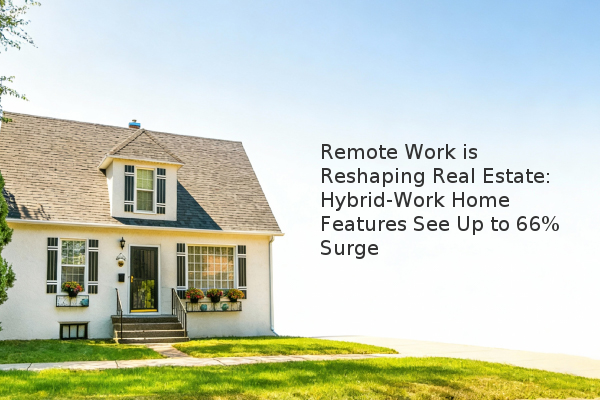
The demand for homes with dedicated remote work features is not a temporary trend but a fundamental shift in the US real estate market, with listings highlighting hybrid-work amenities surging by as much as 66%. This evolution reflects a permanent change in buyer priorities, placing a premium on flexibility and functionality. For sellers, highlighting these features can significantly increase a property's appeal and value, while buyers must now consider home office potential as a critical factor in their search.
What Remote-Work Features Are Buyers Searching For? The definition of a "remote-ready" home has expanded beyond a simple desk space. Today's buyers are actively seeking specific features that support productivity and a balanced lifestyle. Key amenities include a dedicated home office—a separate room with a door for privacy, not just a nook in a bedroom. Other high-demand features include built-in shelving, strong and reliable internet infrastructure, and multifunctional spaces like flex rooms that can serve as a gym or a creative studio. Outdoor living areas have also become a major selling point, providing essential breaks from screen time. Properties that offer a "she-shed" or a converted garage office are seeing particularly strong interest, as they provide a clear physical separation between work and home life.
How Does a Home Office Impact Property Value? While it's difficult to assign a precise dollar value, homes with well-designed, permanent work-from-home spaces consistently attract more buyers and can command a premium. According to industry assessments from 2023, listings that explicitly mention a "home office" or "dedicated workspace" often sell faster and closer to their asking price compared to similar properties without these features. The value is not just in the square footage but in the perceived functionality it adds. A converted bedroom with built-ins is more valuable than an empty room. Based on our experience assessment, investing in creating a legitimate office space, such as adding built-in desks, soundproofing, or upgraded electrical outlets for multiple monitors, typically offers a strong return on investment by making the property stand out in a competitive market.
What Should Sellers Do to Capitalize on This Trend? For homeowners considering selling, a few strategic upgrades can make a property highly attractive to the growing remote workforce. First, stage a dedicated office space. If a room is used as a catch-all storage area, clear it out and set it up with a desk, chair, and good lighting to help buyers visualize its potential. Secondly, highlight your home's technology. Ensure your listing description mentions high-speed internet options, any pre-wiring for video conferencing, or a strong cellular signal. Finally, showcase flexibility. Photograph that extra bedroom as both a guest room and a office, and emphasize any multifunctional areas like a finished basement or a sunroom that can serve multiple purposes. These steps demonstrate the home's ability to adapt to a hybrid lifestyle.
As a Buyer, What Should You Look For in a Remote-Ready Home? Buyers need to adjust their checklist to prioritize long-term functionality. Beyond the number of bedrooms, evaluate the layout and noise levels. Is there a quiet area away from the main living spaces? Check the practicality of the space—are there enough power outlets and good natural light? Consider the internet service providers available in the area and their maximum speeds, as this is a non-negotiable for remote work. It's also wise to think about future resale value; a home with a clearly defined office space will likely appeal to a larger pool of buyers down the line.
The integration of work and life is a lasting reality, making a home's ability to support both a key determinant of its market success. Sellers who strategically present their property's remote-work capabilities are positioned to achieve a faster sale and potentially a higher sale price. Buyers, on the other hand, should view a functional home office not as a luxury but as a core requirement that supports their professional needs and personal well-being for years to come.