Browse

Log in / Register
 Share

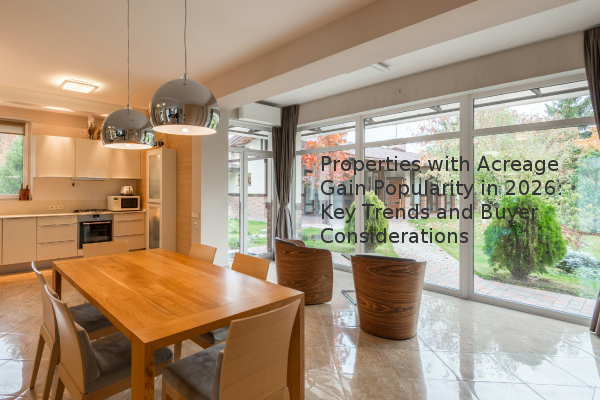
Properties featuring significant land are dominating buyer interest in 2026, driven by a sustained demand for privacy, space for remote work, and multi-generational living arrangements. Based on our experience assessment, this trend is evident across diverse markets, from rural retreats to suburban enclaves, with acreage being a primary value driver for a growing segment of the market. This analysis outlines the defining features of these sought-after properties and provides practical insights for prospective buyers.
The most popular properties are not merely defined by their square footage but by the quality and utility of the land itself. Key characteristics include functional outbuildings, natural features, and a clear sense of privacy. For instance, a converted dairy barn in Roxbury, CT, on 45 acres exemplifies this trend, offering rolling meadows and an orchard alongside a modernized living space. Similarly, a 300-acre lot in Cambridge, OH, includes a 10-acre lake, appealing to recreational needs. These properties often feature additional structures like guest cottages, workshops, or large garages, which enhance their functionality and investment potential. The appeal is not just rural; even urban listings, like a 2,000-square-foot home in Brooklyn, NY, gain attention by offering unconventional space, including a private garage and a large backyard, assets rarely found in a city setting.
Current market dynamics suggest several converging factors. The normalization of remote and hybrid work models has reduced the necessity of a daily commute, expanding the geographic range for primary residences. This has increased the viability of properties further from urban cores. Furthermore, multi-generational living arrangements are on the rise, creating demand for compounds with multiple dwellings or large primary homes with separate living areas. A property in North Adams, MA, for example, includes five guest cottages, making it suitable for a family compound or a commercial venture like a bed-and-breakfast. Data from a 2025 National Association of Realtors report indicates that 15% of home buyers sought multi-generational homes, a figure that has likely influenced 2026 market trends. Buyers are also seeking a permanent sense of retreat, prioritizing features that support hobbies, wellness, and family activities on their own property.
Purchasing a home with significant land involves unique considerations beyond the standard home-buying checklist. Professional land surveys and zoning reviews are critical to understand property boundaries, easements, and permitted uses. For example, running a business like a B&B from a property requires specific zoning approvals. Maintenance costs for large tracts of land can be substantial; factors like landscaping, septic system capacity for large homes, and upkeep of additional structures must be factored into the long-term budget. It's also essential to assess utility access and internet connectivity, especially in rural areas, as reliable high-speed internet is non-negotiable for remote work. Environmental assessments, particularly for properties with water features like ponds or lakes, can identify potential liabilities. A thorough evaluation by a qualified home inspector familiar with large-acreage properties is a prudent step.
| Consideration | Key Question to Ask | Why It Matters |
|---|---|---|
| Zoning & Land Use | What are the local zoning regulations for the parcel? | Determines if you can add structures, run a business, or farm the land. |
| Utility Costs | What are the average annual costs for well water, septic maintenance, and land grading? | Maintenance for large lots is significantly higher than for standard urban lots. |
| Property Tax | How is the land assessed, and what are the annual property tax obligations? | Acreage can lead to higher property taxes, impacting affordability. |
| Access & Infrastructure | Is the driveway maintained by the municipality or is it a private road? | Private road maintenance can be a shared cost with neighbors or a sole responsibility. |
While market conditions vary by state, properties with acreage often demonstrate a different value appreciation pattern compared to standard suburban homes. Their value is typically less volatile but can be more sensitive to regional economic factors. The scarcity of large, desirable parcels can create a strong value floor. For instance, a historic 1852 farmhouse on 4 acres in Saint Peters, MO, benefits from both its unique character and the finite supply of such properties. However, the buyer pool for these homes is smaller, which can sometimes lead to a longer marketing time, though premium properties in high-demand areas often sell quickly. The investment is not solely financial; it also encompasses lifestyle value, which is a significant motivator for buyers in this segment.
Prospective buyers should prioritize a clear understanding of their lifestyle needs and a thorough due diligence process. Focusing on properties where the land offers tangible utility—whether for recreation, income potential, or family expansion—is key. Engaging a real estate professional with specific experience in landed properties in your target area is highly recommended to navigate the unique complexities of these transactions successfully.