Browse

Log in / Register
 Share

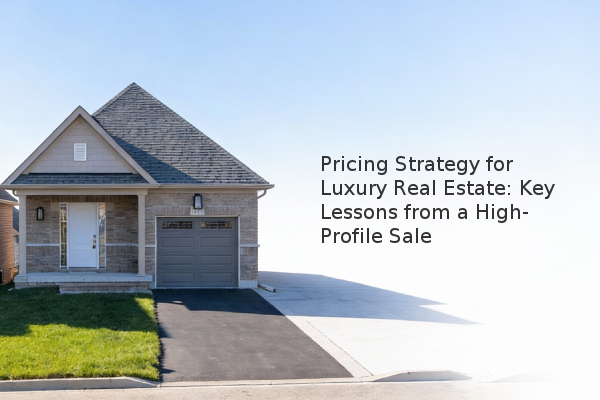
Selling a luxury property often requires a multi-year strategy and significant price adjustments to align with market demand. Based on an analysis of a recent high-profile transaction, the most critical factors for a successful sale are realistic initial pricing, patience, and understanding the limited buyer pool for premium homes. This approach, while time-consuming, can ultimately secure a deal even after a property has lingered on the market.
For luxury properties priced significantly above the local market average, a extended marketing period is often necessary. Industry professionals frequently advise clients to anticipate a timeline of three to four years to find a qualified buyer. This extended period allows the listing to reach the small, targeted audience of individuals capable and willing to make such a substantial investment. The strategy hinges on patience, as a premature, large price reduction can be more detrimental than a strategic, gradual price adjustment over time. The goal is to find the right buyer, not just any buyer.
An aspirational initial asking price can hinder a property's market performance. If a home is listed too high, it may deter serious buyers and become stigmatized. A more effective approach involves setting a competitive price based on recent, comparable sales (comps) in the area. When a property does not attract offers, strategic price reductions signal to the market that the seller is motivated. For instance, a Tennessee waterfront estate was initially listed at $8.75 million. After several years, the price was progressively reduced to $6.95 million, which finally attracted a buyer and resulted in a pending sale. This demonstrates that calibrating the price to market realities is essential to generating buyer interest.
Beyond price, specific amenities are crucial for attracting luxury buyers. Properties that offer unique features and a premium lifestyle experience stand out. Key desirable elements often include:
Sellers who have invested in renovations often expect a strong return on investment (ROI). This is the profit earned from the sale relative to the initial purchase price and improvement costs. While significant upgrades can increase a home's value, the final sale price is determined by the current market. In the case of the Tennessee estate, the owners purchased the property for $2.86 million, invested in renovations, and, with a pending sale near the $6.95 million mark, are positioned for a substantial gain. This highlights that even with price adjustments, a well-maintained and upgraded property in a desirable location can yield a positive financial outcome over the long term.
To maximize your chances of a successful sale, focus on these key actions: obtain a professional appraisal to set a competitive initial price, prepare for a potentially extended marketing period, and highlight the unique, high-value features of your property in listings.