
Browse

Log in / Register
 Share
Share
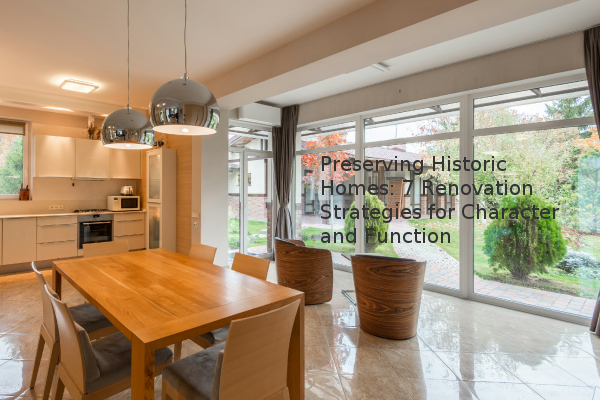
Renovating a historic home requires a specialized approach that balances modern functionality with the preservation of original character. Based on our experience assessment, the most successful projects integrate practical updates while honoring the property's architectural integrity. Key strategies include maximizing storage without compromising style, rethinking traditional layouts, and uncovering hidden original features. For homeowners of properties like an 1861-era house, these methods can significantly enhance livability while protecting the home's historical value and potentially increasing its market appeal.
How can you add storage to a historic kitchen without losing charm? Many historic kitchens lack sufficient cabinet space, leading to clutter and inefficient use of area. The solution often lies in a hybrid approach. Installing new upper cabinets with doors provides concealed storage for appliances, while retaining a single, character-rich element like a curtain on one lower cabinet can maintain the room's quaint aesthetic. This strategy addresses the core need for organization—allowing you to store items like a pressure cooker out of sight—without erasing the home's original personality. The goal is to add modern convenience in a way that feels intentional and sympathetic to the home's era.
Is a kitchen island always the best solution for more counter space? In a modern kitchen, a built-in island is a standard solution for increasing prep space. However, in a historic home with a country aesthetic, a permanent island can feel anachronistic and disrupt the flow. A more period-appropriate alternative is a sturdy farm table. This piece of furniture offers versatile workspace for cooking, dining, or projects and can be moved as needed. Choosing a freestanding farm table over a fixed island provides functionality while preserving the authentic feel of a historic kitchen.
What is the impact of removing non-original window treatments? Natural light is a valuable asset, especially in spaces meant for creative work like an art studio. In older homes, non-original additions such as interior shutters can significantly darken a room. If these features are not part of the home's original construction, removing them is a low-impact way to flood the space with light. This simple change can dramatically improve the ambiance and usability of a room without affecting its historical integrity, as long as the removal is done carefully to avoid damaging original window frames.
Why should demolition be approached with caution in an old house? Older homes often contain hidden treasures beneath later renovations. Aggressive demolition risks permanently destroying irreplaceable original materials. A methodical, careful approach is critical. For example, when removing wall paneling added in the 1980s, crews might discover historic beadboard—a type of wooden paneling with distinctive vertical lines and grooves. This material, which originated over four centuries ago, adds immense character and value. Carefully salvaging and repurposing such finds for walls or ceilings is a sustainable practice that honors the home's history.
Can wallpaper be used effectively in a historic home? Wallpaper is a powerful tool for adding personality and period-appropriate detail to a historic home. Unlike paint, wallpaper can introduce complex patterns and textures that make a significant visual impact. It can be applied in strategic areas, such as a kitchen, laundry room, or as a decorative border on a fireplace surround and molding. Selecting patterns that complement the home's era, rather than working against it, ensures the design feels cohesive and enhances the architectural story.
What are the key considerations for a successful historic renovation? A successful renovation of a historic property hinges on respect for the original structure. This involves:
The most rewarding outcome of a thoughtful historic renovation is a home that meets contemporary needs while its unique story and craftsmanship remain intact for future generations.


