Browse

Log in / Register
 Share

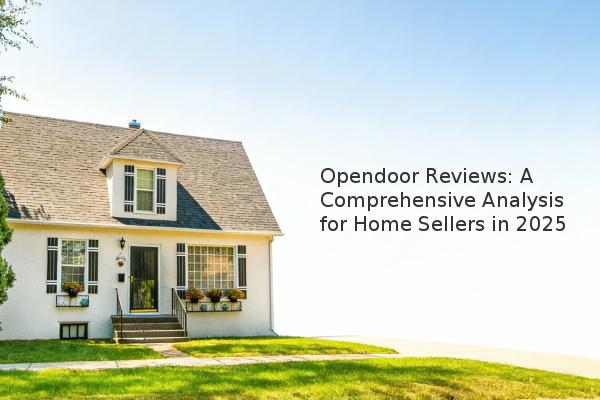
Based on an analysis of recent user experiences and market data, Opendoor offers a viable, convenience-focused alternative to traditional home sales, primarily benefiting sellers seeking speed and certainty over maximum sale price. The core trade-off involves a convenience fee, which is the service charge Opendoor deducts from its offer, typically ranging from 5% to 14% of the home's value. This model, known as an iBuyer (instant buyer), uses algorithms and local market data to make cash offers on homes, streamlining the process but often resulting in a below-market-value price.
The process begins with an online request for an offer on Opendoor's website. You provide details about your property, and Opendoor's automated valuation model generates a preliminary offer. If you accept, the next step is a mandatory home assessment, where an Opendoor representative inspects the property to verify its condition. Following this assessment, you receive a firm, all-cash offer. There are no open houses or showings. Once you agree, you select a closing date—often as quickly as 10-14 days—and Opendoor handles the rest, including necessary repairs (which are deducted from the offer) and the closing process. The key advantage is the as-is sale, meaning you are not required to make any repairs or improvements before the sale.
Sellers consistently praise three main benefits in their Opendoor reviews. First is the unmatched speed and flexibility. For those facing a relocation, divorce, or financial hardship, the ability to choose a closing date within a few weeks is a significant relief. Second is the certainty of the sale. Unlike a traditional sale that can fall through due to a buyer's financing issues, Opendoor's cash offer is guaranteed upon contract signing. Third is the sheer convenience. The elimination of staging, continuous showings, and negotiations reduces the emotional and physical strain typically associated with moving.
The most significant drawback is the financial cost. The convenience fee can be substantial. When combined with potential repair deductions and standard closing costs, the net proceeds can be considerably lower than what might be achieved on the open market with a real estate agent. The following table illustrates a potential cost comparison for a $500,000 home.
| Sale Method | Sale Price | Agent Commission (3%) | Opendoor Service Fee (8%) | Estimated Net Proceeds |
|---|---|---|---|---|
| Traditional Sale | $500,000 | $15,000 | $0 | ~$485,000 |
| Opendoor Sale | $475,000 | $0 | $38,000 | ~$437,000 |
Note: Figures are estimates. Traditional sale assumes seller pays agent commission; Opendoor sale includes a typical service fee and potentially a lower initial offer.
Additionally, Opendoor's offers are heavily influenced by its proprietary algorithms, which may not always account for unique, high-value features of a home that could command a premium price in a traditional sale.
The decision hinges on your personal priorities. Opendoor is an excellent fit if your primary goals are speed, certainty, and a hassle-free experience, and you are willing to pay a premium for those benefits. It is less ideal for sellers who have time to wait for the best possible price, whose homes have unique characteristics not easily captured by an algorithm, or who are in a seller's market where competition could drive the price significantly higher. Before committing, it is crucial to get a official offer from Opendoor and compare it against a professional broker price opinion (BPO) or a comparative market analysis from a local agent to understand the true financial trade-off.
In summary, Opendoor provides a valuable service for a specific segment of sellers. The key to a successful experience is understanding the financial implications and aligning the service with your specific needs for timing and convenience. Always obtain multiple estimates and weigh the certainty of a quick sale against the potential for higher net proceeds on the open market.