Browse

Log in / Register
 Share

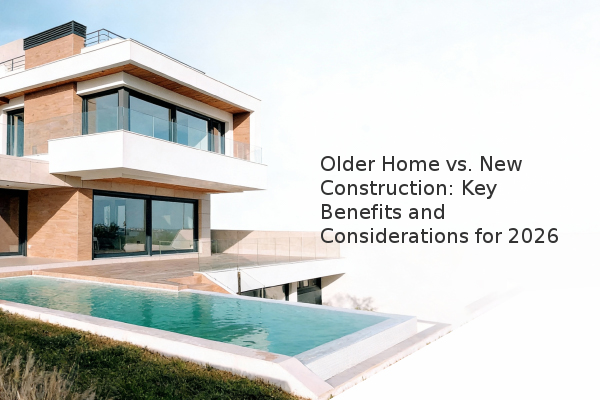
Buying an older home can be a smarter financial and lifestyle decision than purchasing new construction in 2026. Based on our experience assessment, established houses often offer better value per square foot, superior construction quality, and more desirable locations. While new builds provide modern amenities, the unique charm, larger lot sizes, and proven durability of older homes present a compelling case for many buyers. This analysis outlines the key advantages to consider.
What are the financial advantages of an older home? The most immediate benefit is cost. On average, a comparably sized new construction can sell for 10% to 20% more than an updated older home. This price difference is largely driven by the high cost of modern, energy-efficient materials and building techniques used in new constructions. For a buyer, this means your budget may allow for a larger or more centrally located property if you opt for an older home. While older homes might have higher potential maintenance costs, the initial purchase price is significantly lower, freeing up capital for renovations or savings.
Is the construction quality better in older houses? The adage "they don't build 'em like they used to" often holds true. Many older homes were built with materials that are more durable or simply unavailable today. For instance, they might feature wood from old-growth trees, which is more resistant to rot and warping. Walls constructed with plaster and lathe (a system using wooden strips covered in plaster) are structurally stronger and provide better sound insulation than modern drywall. This level of craftsmanship, aimed at longevity, is difficult to replicate in contemporary volume-built homes.
How does location factor into the decision? Older homes are typically situated in well-established neighborhoods. These areas often have mature landscaping, fully developed community amenities, and proven school districts. The stability of such a location is a significant advantage. You can assess factors like crime rates, walkability, and future development with more certainty than in a newly developed area where these elements are still evolving. This established character often translates into more stable property values over time.
What about the unique character and lot size? New constructions reflect current trends, but older homes possess unique character that cannot be duplicated. Features like original hardwood floors, intricate crown molding, and built-in cabinetry are hallmarks of their era. Furthermore, lot size tends to be a major differentiator. Data indicates that while the median size of a new home has increased, the median lot size has decreased significantly. Builders maximize profit by building larger houses on smaller plots. If a spacious, private backyard is a priority, you are far more likely to find it with an older home.
Conclusion: Key Takeaways for 2026 Home Buyers Choosing between an old and new home depends on your priorities. If you value lower initial cost, proven construction quality, established neighborhoods, unique architectural character, and larger outdoor spaces, an older home is a strong contender. It's essential to budget for potential updates to systems like electrical or plumbing. For 2026, carefully weigh the long-term value and charm of an older property against the modern convenience of a new build. A thorough home inspection is non-negotiable when considering an older house.