Browse

Log in / Register
 Share
Share
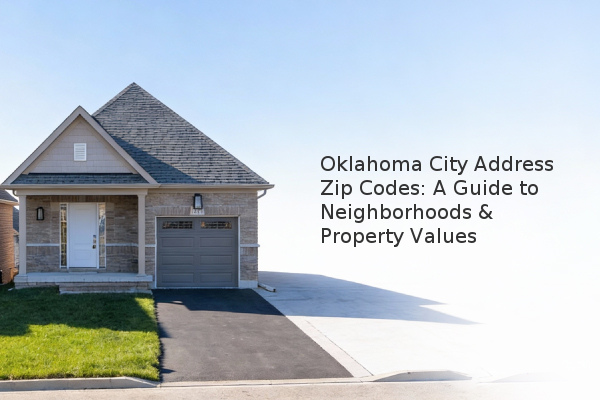
Understanding the relationship between an Oklahoma City address and its corresponding zip code is crucial for making informed real estate decisions, as these postal codes directly influence property values, school districts, and lifestyle amenities. This guide provides a clear breakdown of how zip codes map onto Oklahoma City's diverse neighborhoods, offering actionable insights for buyers and sellers.
Zip codes are numerical codes used by the United States Postal Service (USPS) to efficiently group delivery routes. In a vast city like Oklahoma City, a single zip code can encompass multiple distinct neighborhoods, each with its own character. For real estate purposes, a zip code is a key data point that helps identify market trends and property characteristics.
The correlation between an Oklahoma City address and its zip code is a significant factor in property valuation. Areas with certain zip codes consistently command higher prices due to a combination of factors like school quality, proximity to employment centers, and overall neighborhood development. For instance, properties in the 73120 zip code, which includes parts of the affluent Nichols Hills area, often have higher median values compared to those in other parts of the city. This variance is driven by perceived desirability and the quality of local infrastructure.
A key metric for assessment is the price per square foot, which can fluctuate noticeably across different zip codes. The table below illustrates a simplified comparison of hypothetical market data based on general trends. It is essential to consult a current Multiple Listing Service (MLS), a database used by real estate professionals, for precise, up-to-the-minute figures.
| Zip Code | Sample Neighborhoods | General Market Vibe | Estimated Median Price (SFH)* |
|---|---|---|---|
| 73103 | Downtown, Midtown | Urban, Mixed-Use, Condos | $350,000 |
| 73120 | Nichols Hills, Crown Heights | Established, Affluent | $650,000 |
| 73162 | North OKC (Quail Creek) | Suburban, Family-Friendly | $400,000 |
| 73130 | Lake Hefner Area | Waterfront, Recreational | $500,000 |
| 73109 | South OKC | Affordable, Diverse Housing Stock | $225,000 |
*Estimates are for illustrative purposes only and represent a snapshot in time. Always verify with a local real estate expert.
While a zip code provides a useful starting point, savvy home buyers must dig deeper. A zip code can cover a large geographic area with varying micro-markets. Relying solely on it can be misleading. The most critical step is to research the specific neighborhood and even the individual block. Drive through the area at different times of the day and week to assess noise levels, traffic patterns, and overall upkeep of surrounding properties.
Furthermore, investigate the specific school districts assigned to an address, as these boundaries do not always align perfectly with zip codes. A home in one zip code might be zoned for a highly sought-after school, while a property a few blocks away in the same zip code is not. Always confirm school assignments directly with the local school district.
For sellers, understanding the real estate trends within your specific zip code is a powerful pricing tool. By analyzing comparable sales (comps)—recently sold properties with similar features in the same zip code—you and your agent can establish a competitive and realistic listing price. Highlighting the positive attributes associated with your zip code in the property's marketing materials, such as access to parks, low crime statistics, or convenient shopping, can attract the right buyers.
It is also important to be aware of any potential challenges. If your zip code has a higher average property tax rate or is undergoing significant infrastructure changes, these factors should be considered in your pricing strategy and disclosure process. Transparency about the neighborhood, based on factual zip code data, builds credibility with potential buyers.
To navigate the Oklahoma City real estate market effectively, use zip codes as a preliminary filter but not the final decision-making tool. Combine zip code data with hyper-local neighborhood research and expert advice for a comprehensive understanding of any property's true value and potential.