Browse

Log in / Register
 Share
Share
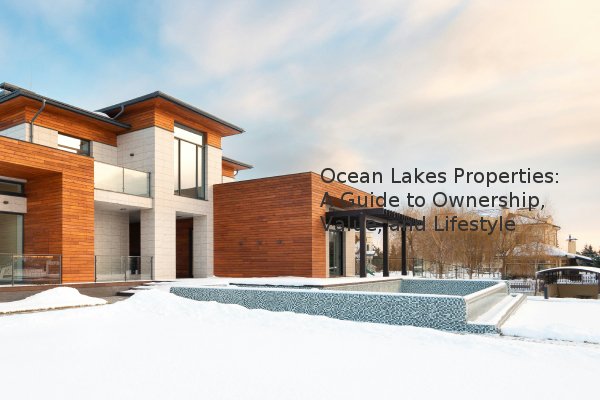
Owning a property in an ocean lakes community offers a unique blend of waterfront living and recreational amenities, but it requires a clear understanding of the associated costs, regulations, and lifestyle considerations. Based on our experience assessment, these properties can be a valuable investment and a personal retreat, yet they demand thorough due diligence regarding homeowners' association (HOA) rules and long-term maintenance. The core appeal lies in direct access to both lake and ocean environments, which significantly influences property value and quality of life.
What Exactly Are Ocean Lakes Properties?
An ocean lakes property typically refers to a residential community situated on a freshwater lake that is also in close proximity to the ocean coastline. These are often master-planned communities governed by a Homeowners' Association (HOA), a legal entity that manages common areas and enforces community rules. Key features usually include private lake access for boating or fishing, community pools, clubhouses, and security. The unique value proposition is the ability to enjoy tranquil lake life while being just a short drive from the dynamic ocean beach. Purchasing a home here often means buying into a specific, amenity-rich lifestyle, which is a major factor in the property's valuation.
What Are the Financial Considerations Beyond the Purchase Price?
The initial sale price is just one component of the financial picture. Prospective buyers must budget for recurring and potential one-time costs. Property taxes will be a significant annual expense, and in some coastal counties, they can be higher than inland areas. HOA fees are mandatory and cover the maintenance of shared amenities; these fees can range from a few hundred to over a thousand dollars annually. It is critical to review the HOA's reserves—the funds set aside for major future repairs—as an underfunded HOA could lead to special assessments, which are large, unexpected fees charged to all homeowners.
| Estimated Annual Cost Category | Typical Range (Low End) | Typical Range (High End) | Notes |
|---|---|---|---|
| HOA Fees | $600 | $2,400+ | Varies greatly by community amenities. |
| Property Insurance | $1,200 | $3,000+ | Flood insurance is often a separate, required policy. |
| Property Taxes | 0.5% of home value | 1.5% of home value | Varies significantly by state and county. |
| Routine Maintenance | $1,000 | $5,000 | Higher for older properties or those with docks. |
What Are the Common Pitfalls and How to Avoid Them?
The most common challenges involve the HOA and environmental factors. Before making an offer, meticulously review the HOA's Covenants, Conditions, and Restrictions (CC&Rs). These documents outline what you can and cannot do with your property, such as rules on renting, parking, exterior modifications, and boat storage. Furthermore, due to the dual water exposure, flood insurance is a near-certain requirement and can be costly. A standard homeowner's policy does not cover flood damage; a separate policy through the National Flood Insurance Program (NFIP) or a private insurer is essential. Always conduct a specialized inspection focusing on moisture, mold, and the integrity of any private docks or seawalls.
Is an Ocean Lakes Property a Good Investment?
The investment potential is multifaceted. These properties often hold their value well due to the limited supply of desirable waterfront locations. They can also generate rental income, particularly in vacation markets. However, their value is closely tied to the health and management of the community and its amenities. A well-run HOA that maintains high standards protects property values for everyone. Market volatility can be more pronounced than in standard suburban markets, with prices rising sharply in boom times but potentially softening more during downturns. It is generally considered a long-term investment rather than a short-term flip.
Key takeaways for prospective buyers include: reviewing the HOA's financial health and CC&Rs before purchasing, factoring in the total cost of ownership including insurance and fees, and understanding that while the lifestyle is a major benefit, the investment carries unique risks tied to its environment and community structure.