Browse

Log in / Register
 Share
Share
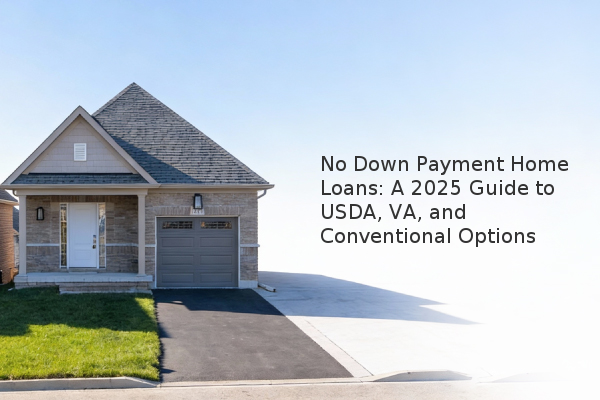
For eligible borrowers, no down payment home loans provide a viable path to homeownership by eliminating the largest upfront cost. These specialized mortgage programs, primarily offered by government agencies, can make buying a house possible with minimal savings. However, they come with specific eligibility requirements, including income limits, property location stipulations, and often mandatory mortgage insurance. This guide examines the three main types of no-down-payment mortgages available in 2025: USDA, VA, and conventional loan alternatives, helping you understand if you qualify and what to expect.
What are the main types of no-down-payment home loans? The most accessible no-down-payment options are backed by the U.S. government. The USDA loan program, administered by the U.S. Department of Agriculture, is designed to promote homeownership in designated rural and suburban areas. To qualify, borrowers must meet income caps based on the area's median income and demonstrate a stable credit history. The VA loan program is a benefit for eligible veterans, active-duty service members, and certain members of the National Guard and Reserves. Guaranteed by the Department of Veterans Affairs, VA loans do not require a down payment or monthly mortgage insurance, making them one of the most favorable loan products available. While not entirely fee-free, they offer significant savings. For those who don't qualify for government programs, some conventional lenders may offer 100% financing options, though these often require excellent credit and may carry higher interest rates.
Who qualifies for a USDA or VA loan? Eligibility is the cornerstone of no-down-payment programs. VA loan eligibility is determined by your service record. Generally, you must have served 90 consecutive days during wartime, 181 days during peacetime, or 6 years in the Reserves or National Guard. A Certificate of Eligibility (COE) from the VA is required to proceed. For a USDA loan, eligibility is based on both the property's location and your household income. The home must be located in a USDA-eligible area, which many are surprised to find includes numerous suburbs. Your total household income cannot exceed 115% of the area's median income. Lenders will also look for a credit score typically above 640 and a debt-to-income (DTI) ratio that demonstrates you can manage the new mortgage payment alongside existing debts.
What are the hidden costs and long-term considerations? While the absence of a down payment is a major advantage, these loans are not without costs. The most significant is mortgage insurance. For USDA loans, this includes an upfront guarantee fee of 1% of the loan amount (which can be financed into the loan) and an annual fee of 0.35%, which is divided into monthly payments. VA loans do not have monthly mortgage insurance, but most borrowers will pay a one-time Funding Fee, which can range from 1.25% to 3.3% of the loan amount, depending on your service category and whether it's your first VA loan. This fee can also be financed. Furthermore, with no equity from a down payment, you start with 100% loan-to-value (LTV). This means if property values dip, you could potentially owe more on the mortgage than the home is worth, a situation known as being "underwater."
| Loan Feature | USDA Loan | VA Loan | Conventional 97 (3% Down) |
|---|---|---|---|
| Minimum Down Payment | 0% | 0% | 3% |
| Mortgage Insurance | Upfront + Annual Fee | One-Time Funding Fee | Private Mortgage Insurance (PMI) |
| Credit Score Minimum | Typically 640+ | Typically 620+ | Typically 620-640+ |
| Primary Eligibility | Income & Property Location | Military Service | Creditworthiness & DTI |
How does the application process work for these loans? The process for a no-down-payment loan is similar to a traditional mortgage but with added verification steps. For a VA loan, the first step is obtaining your COE through your lender or the VA's eBenefits portal. You will then work with a VA-approved lender who is familiar with the program's specific appraisal and underwriting requirements. The USDA loan process requires your lender to confirm that both you and the property meet the program's guidelines. The property will undergo a specific USDA appraisal to ensure it meets basic habitability standards. In both cases, you'll need to provide standard documentation, including tax returns, pay stubs, and bank statements. Working with a lender experienced in these niche programs is crucial for a smooth transaction.
Navigating no-down-payment options requires a clear understanding of the trade-offs. These programs are powerful tools for achieving homeownership but come with specific rules and long-term financial implications.