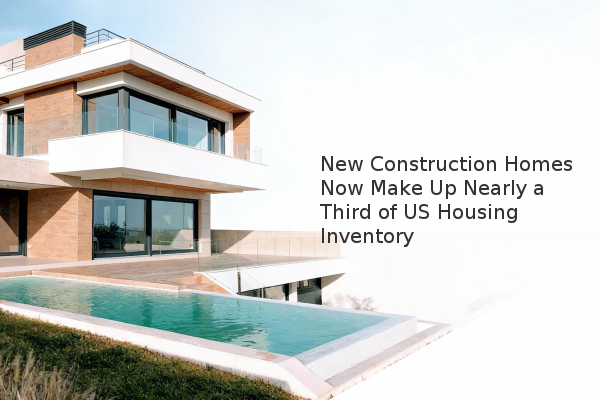
Newly built single-family homes accounted for 31.4% of all homes for sale in the second quarter of 2023, a near-record high that underscores a dramatic shift in the U.S. housing market. This surge is primarily driven by a severe shortage of existing homes for sale, pushing buyers toward new construction. While the share is down slightly from the previous quarter's peak, this is a normal seasonal pattern, and new homes remain a critical option for buyers, especially in Southern metros like El Paso, Texas, and Raleigh, North Carolina.
Why Are New Homes a Larger Share of the Market?
The elevated share of new construction is the result of several converging factors.
- The Pandemic Homebuilding Boom: Builders rushed to capitalize on the homebuying frenzy of 2021 and early 2022, which was fueled by record-low mortgage rates (the interest rate on a loan used to purchase a property) and the rise of remote work. This led to a significant increase in building permits and new home completions.
- The Lock-in Effect on Existing Homes: The primary reason for the current imbalance is the lack of existing homes for sale. With mortgage rates now hovering near a two-decade high, homeowners who secured low rates years ago are reluctant to sell and lose their favorable financing. This is known as the lock-in effect. Builders, who are businesses rather than individuals, do not experience this same effect and continue to bring inventory to market.
- Leftover Inventory: While buyer demand has slowed due to high rates, builders are still working through inventory constructed over the last few years. In June, the number of newly built single-family homes for sale was up 4.5% year-over-year, while the supply of existing homes dropped by 18%.
Where Is New Construction Most Common?
The prevalence of new homes varies significantly by region, largely influenced by land availability and local regulations. Based on Q2 2023 data, new construction is most common in:
- El Paso, TX (52% of single-family inventory)
- Omaha, NE (46%)
- Raleigh, NC (42.1%)
- Oklahoma City, OK (39%)
- Boise, ID (38%)
These areas often have more sprawling land and less restrictive building codes. Conversely, new homes are least common in areas with limited land and strict regulations, such as Honolulu, HI (2.8%), and several California metros including San Diego (3.3%).
What Does This Mean for Homebuyers?
For buyers struggling to find a home in a market with record-low inventory, new construction presents a viable path to homeownership. Builders are often more likely to offer incentives like price reductions, closing cost credits, or mortgage rate buydowns to attract buyers. This can provide significant value that is rarely available when purchasing an existing home from an individual seller.
Based on our experience assessment, buyers should consider the following:
- Research Builder Concessions: Actively inquire about ongoing promotions. It's not uncommon for builders to offer substantial incentives, such as $15,000 to $25,000 in concessions, which can be used for upgrades or to lower your monthly payment.
- Understand Regional Dynamics: Your options will be vastly different depending on your location. In many Southern and Midwestern metros, new construction may be your primary option.
- Weigh Timing and Cost: While new homes offer modern amenities and fewer immediate repairs, they often come with a higher price tag. Evaluate your budget and timeline carefully.
The housing market's reliance on new construction is a direct response to the historic shortage of existing homes. For the foreseeable future, new builds will remain a crucial, and in some areas, the dominant option for prospective homebuyers.


 Share