Browse

Log in / Register
 Share

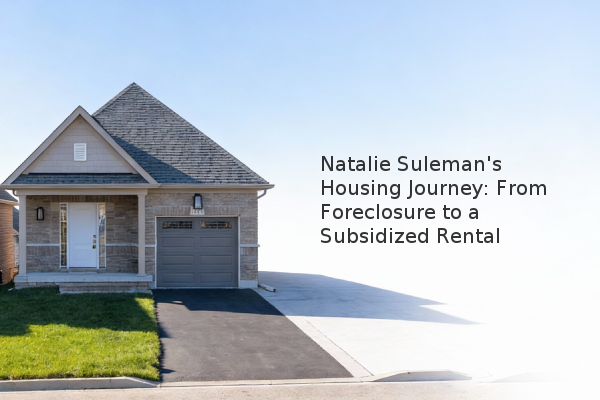
Natalie Suleman, widely known as "Octomom," has navigated significant financial and housing challenges, ultimately securing a stable living situation for her large family through a community-supported rental agreement. Her story underscores the reality of housing affordability and the difficult trade-offs some families face. After years of struggle, including a home foreclosure, Suleman and 11 of her children now live in a three-bedroom townhouse in Orange County, California, made possible by a 50 percent rental discount from local church members. This arrangement highlights a critical aspect of the real estate market: creative solutions are sometimes necessary to achieve housing stability, especially for large or unique family situations.
Suleman's experience provides a candid look into the direct financial decisions that can impact homeownership. She revealed that instead of using over $100,000 in savings and a $60,000 inheritance for a down payment on a house, she chose to invest those funds into in vitro fertilization (IVF). This decision illustrates a common financial trade-off where long-term asset building through real estate is weighed against other significant life goals. For many prospective buyers, allocating savings is a central part of the home buying process.
Suleman's housing history has been marked by instability. In 2012, her former four-bedroom home in La Habra, CA, went into foreclosure, a legal process where a lender seizes and sells a property after the owner fails to make mortgage payments. This forced the family to move. They subsequently rented a 5,000-square-foot home for a reported $2,150 per month, a cost that proved unsustainable. The constant moving and financial pressure are stark examples of the stress that housing insecurity can place on a family, a situation many Americans can relate to in high-cost areas like California.
The family's current stability stems from a private, community-based arrangement. Suleman secured a three-bedroom townhouse at half the market rate after "good Christian people" from her church offered the discount as a form of support. This type of private rental agreement is not a government program but rather an act of individual charity. It demonstrates how community support networks can sometimes provide a crucial safety net when traditional housing options are out of reach. Suleman has been open about the difficulty of making ends meet, leading her to take various jobs to provide for her children.
Suleman’s story brings to light the long-term financial implications of major life decisions. By choosing to allocate her substantial savings toward IVF instead of a real estate investment, she prioritized family expansion over potential equity growth. She has stated she does not regret having her children but acknowledges the financial path was difficult. Her current income comes from being a full-time caregiver for her autistic son, Aidan, a role for which she now receives payment. However, she notes this income is still insufficient for a "comfortable" life in a high-cost state, a challenge faced by many families relying on fixed or limited incomes.
Suleman's journey offers a perspective on housing affordability and financial prioritization. Key takeaways for anyone considering their own housing and financial future include:
Ultimately, Suleman's experience is a case study in navigating housing markets under extraordinary circumstances, emphasizing that stability often requires resilience, difficult choices, and sometimes, external support.