Browse

Log in / Register
 Share
Share
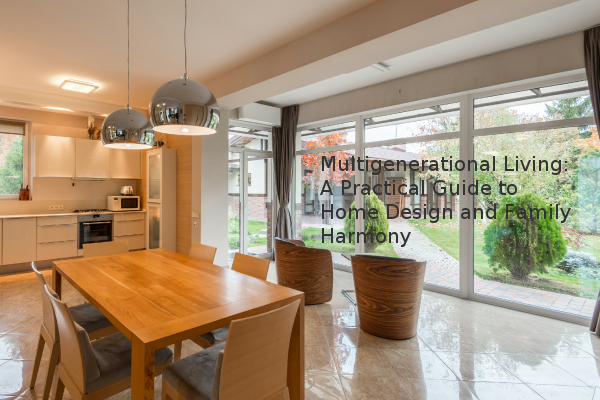
Multigenerational living, where three or more generations share a home, is a significant and growing trend in the United States, driven by financial benefits and a desire for family connection. Based on a Pew Research Center study, 60 million Americans lived in multigenerational households in 2021, a four-fold increase since 1971. While this arrangement can offer substantial savings on housing and childcare, success hinges on selecting a home with the right layout and establishing clear household communication. This guide outlines the key considerations for a harmonious multigenerational home.
The most frequently cited reason for combining households is financial. Purchasing and maintaining one larger home is often more cost-effective than financing two separate households. As one real estate expert notes, in a high-cost market like Bellevue, Washington, a single $2 million home with an Accessory Dwelling Unit (ADU)—a secondary housing unit on the same property—can be more affordable than two smaller homes totaling over $2.6 million. Additional savings are realized by consolidating utilities, groceries, and potentially eliminating or reducing costs for child or adult caregiving. The Pew study found that 25% of adults cited adult caregiving and 12% cited childcare as primary drivers for their decision.
Space and privacy are the most critical factors in a successful multigenerational home. Open-concept layouts are excellent for gathering, but the home must also provide private retreats. Based on professional experience assessing these homes, the following features are highly recommended:
Beyond the physical layout, healthy family dynamics are essential for long-term harmony. The Pew survey found that while 57% of adults reported a positive experience, 40% found it stressful at least some of the time.
Successful multigenerational living requires a deliberate approach to both home selection and family communication. While the financial incentives are powerful, the ultimate reward often lies in the deepened relationships and shared support system that this lifestyle can foster when managed effectively.