Browse

Log in / Register
 Share
Share
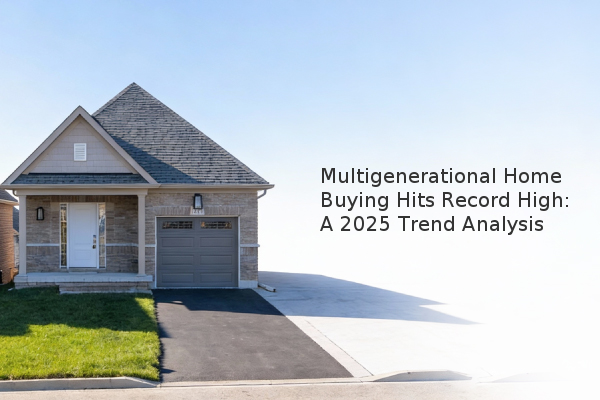
Multigenerational home purchases reached a record high of 17% of all home sales in the United States, driven primarily by economic pressures and changing family needs. According to the National Association of ok s® (NAR) 2025 Home Buyers and Sellers Generational Trends Report, Generation X buyers, those born between 1965 and 1980, are now the leading group in this market, accounting for 21% of such purchases. This trend highlights a strategic shift for families seeking to offset soaring housing costs and manage caregiving responsibilities.
The primary catalyst is financial necessity. With rising mortgage interest rates and home prices, combining resources has become a practical solution for homeownership. The NAR report indicates that over a third of buyers cited "cost savings" as their main motivation, a significant increase from 15% in 2015. This arrangement allows families to share mortgage payments, property taxes, and maintenance costs, making homeownership more attainable. As noted by NAR's Hannah Jones, "One way to offset high housing costs is by combining forces and buying with family."
Gen X, often called the "sandwich generation," is uniquely positioned, frequently supporting both aging parents and adult children simultaneously. Their share of the multigenerational homebuying market has grown dramatically, from just 12% in 2013 to 21% in 2025—a nine-percentage-point increase. This demographic is often at a life stage where they have the equity to purchase a larger property but also face the dual responsibility of eldercare and supporting young adults launching their careers in a challenging economy.
Economic hurdles for young adults are a significant factor. The data shows that 21% of buyers purchased a multigenerational home because their adult children over 18 moved back in, up from 11% a decade ago. Furthermore, 20% reported that their adult children had never left home, a sharp rise from 7% in 2015. High living costs, student loan debt, and a competitive job market make it difficult for younger generations to achieve financial independence, leading them to live with parents longer.
For older millennials (ages 35-44), the decision is often influenced by caregiving. A substantial 35% of older millennial buyers cited their aging parents' health and caretaking needs as a primary reason for purchasing a multigenerational home. Additionally, nearly a third wanted to spend more time with their parents in their later years. This reflects a social shift towards integrated family support systems, moving away from institutional care options.
Conclusion
The rise in multigenerational living is a clear response to current economic and social realities. For families considering this path, the key advantages include significant cost savings, shared caregiving responsibilities, and strengthened family bonds. Based on our experience assessment, this trend is not a temporary anomaly but a lasting feature of the housing market as families adapt to ongoing economic uncertainty. When planning such a purchase, it is crucial to have open financial discussions and consider the legal implications of co-ownership to ensure a harmonious living arrangement.