Browse

Log in / Register
 Share

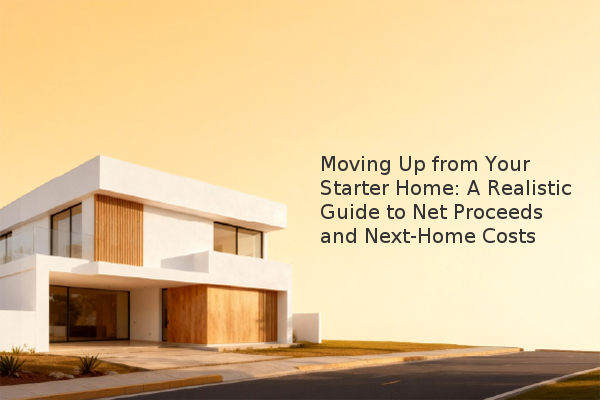
Selling your starter home to buy your next property involves significant, often overlooked costs that can reduce your expected proceeds by 10% or more. A successful move-up plan requires understanding exactly how much cash you'll net from the sale and what you'll need for the new purchase. This guide breaks down the typical expenses for both transactions, using current market data to help you create a realistic financial strategy.
What Are the Major Costs When Selling a Starter Home?
The sale price of your home is not the amount that lands in your bank account. Seller closing costs typically consume 8% to 11% of the final sale price. The largest expense is usually the real estate commission, which is a fee paid to the agents involved in the transaction. This fee is generally 5% to 6% of the sale price, though it is negotiable and varies by region.
In addition to commissions, sellers are responsible for other closing costs. These can include title insurance (a policy that protects against ownership claims), escrow fees, and local or state transfer taxes. Combined, these non-commission fees often add another 3% to 5% to your total selling costs. Sellers also frequently invest in pre-sale preparations like staging, minor repairs, and professional photography, which can cost $1,000 to $3,000. Furthermore, buyer-requested concessions following a home inspection can add $2,000 to $5,000 to your expenses.
Example Breakdown for a $450,000 Home Sale:
| Expense Category | Estimated Cost |
|---|---|
| Real Estate Commission (6%) | $27,000 |
| Other Closing Costs (3%) | $13,500 |
| Home Preparation & Concessions | $5,250 |
| Total Estimated Costs | $45,750 |
| Net Proceeds to Seller | $404,250 |
What Upfront Costs Should You Expect When Buying Your Next Home?
Buying your next home comes with its own set of substantial upfront costs. The most significant is the down payment. While conventional loans can require as little as 3%, a 20% down payment is often recommended to avoid Private Mortgage Insurance (PMI), an additional monthly fee. Buyer closing costs, which cover loan origination fees, appraisal, title insurance, and other services, typically range from 2% to 5% of the purchase price. You should also budget for a home inspection and immediate moving expenses.
Example Breakdown for a $400,000 Home Purchase:
| Expense Category | Estimated Cost |
|---|---|
| Down Payment (5%) | $20,000 |
| Closing Costs (3%) | $12,000 |
| Inspection & Moving | $3,000 |
| Total Estimated Upfront Cost | $35,000 |
What Financial Strategies Can Bridge the Gap Between Selling and Buying?
A critical challenge is timing—the cash from your home sale may not be available when you need to make an offer on a new property. To navigate this, consider these options:
Conclusion: Key Takeaways for a Successful Move
Upgrading from a starter home requires meticulous financial planning. Do not assume your home's sale price is your next down payment. Account for 8-11% in selling costs and prepare for 5-10% in buying costs for your next property. Building a financial cushion and exploring short-term financing options are essential steps to ensure a smooth transition. Based on our experience assessment, flexibility and a realistic budget are your most valuable assets in today’s market.