Browse

Log in / Register
 Share

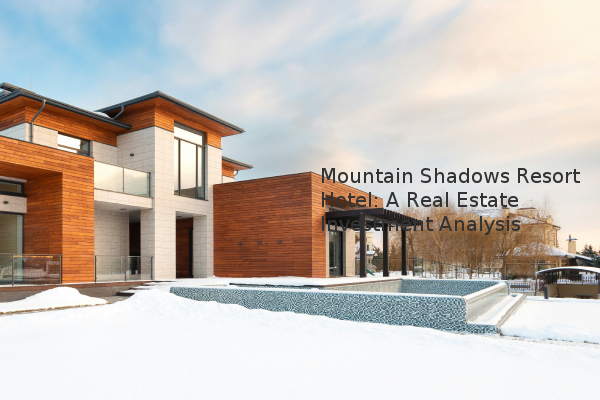
Investing in a property like the Mountain Shadows Resort Hotel represents a significant opportunity within the niche hospitality real estate sector. Based on our experience assessment, the investment potential hinges on location desirability, property condition, and the ability to generate consistent revenue through room rates, event hosting, and ancillary services. This analysis provides an objective overview of the key financial and operational considerations for such a acquisition.
What is the Investment Profile of a Resort Hotel Property? A resort hotel is a commercial real estate asset designed to provide lodging, recreation, and often conference facilities in a destination setting. The valuation of such a property is complex, typically involving the income approach, which calculates value based on the net operating income (NOI) the property is expected to generate. Key metrics include the capitalization rate (cap rate), which is the ratio of NOI to property asset price, and the average daily rate (ADR) for rooms. For a property like Mountain Shadows, investors would scrutinize historical financial statements, occupancy rates, and the condition of the physical assets, including guest rooms, common areas, and recreational amenities like pools and golf courses.
How Do Location and Market Trends Impact Value? The fundamental principle of real estate—location, location, location—is paramount. The value of Mountain Shadows is intrinsically linked to the economic health and tourism appeal of its surrounding area. Investors must analyze local market trends, including the volume of tourist visitors, competition from other hotels and short-term rental properties, and seasonality effects. For instance, a market with strong year-round demand commands higher valuations than one with pronounced seasonal fluctuations. Evaluating comparable sales of similar resort properties in the region provides critical benchmarks for establishing a fair market price.
What are the Major Financial Considerations? Beyond the purchase price, a resort hotel investment carries substantial ongoing costs. These include property tax, an ad valorem tax levied by local governments based on the assessed value of the land and improvements. Investors must also budget for mortgage payments if financing is used, insurance premiums, maintenance, staff salaries, and marketing expenses. The profitability is determined by the gap between revenue streams and these operational expenditures. A detailed pro forma financial model is essential for forecasting cash flow and return on investment.
| Financial Metric | Description | Importance for Investment |
|---|---|---|
| Net Operating Income (NOI) | Gross income minus operating expenses. | Directly determines property value under the income approach. |
| Capitalization Rate | NOI divided by purchase price. | A higher cap rate generally indicates higher risk and potential return. |
| Debt Service Coverage Ratio (DSCR) | NOI divided by annual mortgage debt. | Lenders require a minimum DSCR (e.g., 1.25x) to approve financing. |
What Operational and Regulatory Factors Must Be Considered? Operating a resort hotel requires managing numerous regulatory compliance issues. This includes adhering to health and safety codes, securing proper business licenses, and understanding zoning laws that govern the property's use. The transfer of ownership also involves title insurance, a policy that protects the buyer and lender from financial loss due to defects in the property title. Furthermore, the buyer must assess any existing management contracts, union agreements, or brand affiliations if the hotel is part of a franchise, as these will dictate future operational flexibility.
The due diligence process for a resort hotel is extensive, requiring thorough inspection of financial records, physical assets, and legal contracts. Potential investors should engage a team of professionals, including a commercial real estate broker, a certified public accountant, and an attorney specializing in hospitality transactions. The unique appeal of a property like Mountain Shadows must be weighed against the operational complexities and capital requirements of the hospitality industry. Key takeaways include the necessity of location analysis, rigorous financial modeling, and comprehensive legal review before committing to a purchase.