Browse

Log in / Register
 Share
Share
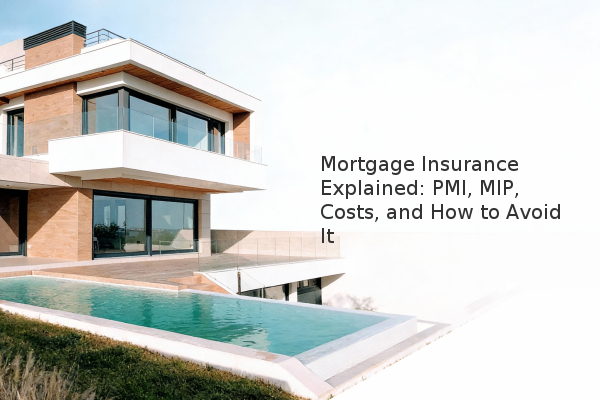
Mortgage insurance is a lender-protection policy required on most loans with a down payment below 20%. For conventional loans, this is Private Mortgage Insurance (PMI), which can be canceled. For FHA loans, it's a Mortgage Insurance Premium (MIP), typically paid for the loan's entire life. Understanding these costs, which can add $30 to $200+ to your monthly payment per $100,000 borrowed, is crucial for an accurate homebuying budget. While it enables homeownership with a smaller down payment, there are strategies to avoid or minimize this expense.
Mortgage insurance is a policy that protects the lender—not the homeowner—if the borrower defaults on the loan. It does not cover property damage or the homeowner's equity. This insurance is a key factor that allows lenders to offer loans with lower down payments, making homeownership accessible to more buyers. The premium is either paid upfront at closing, bundled into your monthly payment, or both, depending on the loan type.
The type of mortgage insurance you'll encounter depends entirely on your loan program.
Conventional Loans and PMI If you use a conventional loan with a down payment of less than 20%, you will typically pay for Private Mortgage Insurance (PMI). The cost is based on your credit score, loan-to-value ratio (LTV), and loan term. A critical advantage of PMI is that your lender must automatically cancel it once you reach 22% equity based on the original amortization schedule. You can also request cancellation at 20% equity, which may require a new appraisal.
FHA Loans and MIP All FHA loans require both an Upfront Mortgage Insurance Premium (UFMIP), which is 1.75% of the loan amount and can be financed, and an annual MIP paid in monthly installments. For most borrowers putting down less than 10%, MIP lasts for the entire life of the loan. If you make a down payment of 10% or more, MIP will be canceled after 11 years.
USDA and VA Loans While not technically called mortgage insurance, these government loans have similar fees. USDA loans have an upfront guarantee fee (1% of the loan amount) and an annual fee (0.35%). VA loans have a one-time funding fee (ranging from 0.5% to 3.6%) but require no down payment and no monthly mortgage insurance.
The cost of mortgage insurance varies significantly based on the loan type, your down payment, and your creditworthiness.
Based on our experience assessment, shopping around with different conventional lenders can help you find the most competitive PMI rate for your financial profile.
While mortgage insurance serves a purpose, avoiding it can save you thousands of dollars over time.
Ultimately, mortgage insurance is a tool that can help you purchase a home sooner. By understanding the rules and costs associated with PMI and MIP, you can make an informed decision and develop a long-term plan to eliminate this cost when possible.