Browse

Log in / Register
 Share
Share
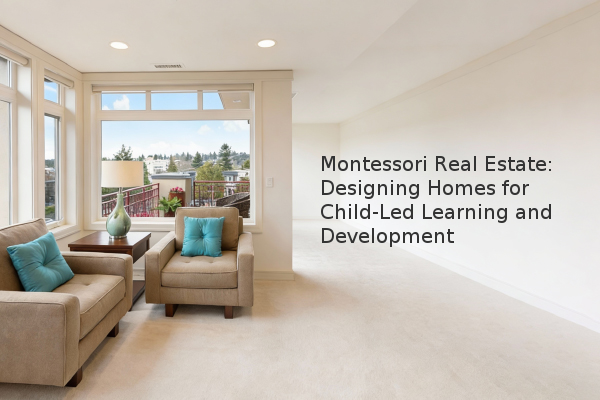
Montessori real estate refers to properties intentionally designed or adapted to support the principles of the Montessori educational method, prioritizing child-friendly spaces that foster independence, exploration, and natural development. For families committed to this philosophy, a home's layout, safety features, and aesthetic are as crucial as its location and price. Investing in a Montessori-aligned home involves seeking specific features like low-profile shelves, child-accessible sinks, and safe, open floor plans that allow children to engage freely with their environment. This approach transforms a house into a prepared environment that supports a child's growth from infancy through adolescence.
The fundamental goal is to create a "prepared environment" where children can function independently and safely. This is not about adding more toys, but about thoughtfully curating the space. Key principles include freedom of movement, access to appropriate materials, and an emphasis on order and beauty. For example, in a Montessori bedroom, a floor bed is often used instead of a crib, allowing the child to get in and out independently and view their room from a perspective of agency. The living areas are typically organized with low, open shelves displaying a limited number of activities, which encourages the child to choose, use, and return items without adult assistance. This design philosophy aligns the physical space with the child's developmental needs, promoting confidence and self-reliance.
When evaluating a home through a Montessori lens, focus on adaptable spaces and safety. Here are key features to prioritize:
| Feature | Benefit | Consideration for Purchase |
|---|---|---|
| Open Living Area | Allows for defined activity zones (e.g., reading, art, practical life) | Assess if the flow supports supervision without intrusion. |
| Low-Positioned Windows | Enables children to see outside, fostering connection with the environment. | Check window safety locks and ease of operation. |
| Single-Story Layout | Eliminates fall risks from stairs for young toddlers and simplifies movement. | May be a priority for families with infants and toddlers. |
| Dedicated "Yes" Space | A safe area where a child can explore without being told "no." | Evaluate if a room or nook can be dedicated for this purpose. |
The decision-making process extends beyond standard criteria like school districts. Families often prioritize the home's potential for adaptation over its immediate turn-key condition. A house that needs cosmetic updates but has a functional, open layout may be more desirable than a fully renovated home with a segmented, adult-centric floor plan. The focus shifts to the property's "bones"—the flow of space, natural light, and access to outdoor areas—rather than high-end finishes. This might mean choosing a quieter cul-de-sac with a fenced yard over a larger home on a busy street, valuing a safe outdoor extension of the learning environment.
One significant challenge is finding a pre-existing home that perfectly meets all Montessori ideals. Most families will need to make modifications. Common hurdles include multi-level homes and fixed, adult-height features. Solutions are often creative and low-cost. For stairs, a safety gate can create a safe boundary while the rest of the level is child-proofed. For high cabinets, a freestanding, child-sized kitchen helper tower can provide access to a counter space. The key is to view any property with an eye for its adaptable potential, not just its current state. Budgeting for these modifications should be part of the overall home purchase plan.
Adopting a Montessori perspective in real estate is a strategic approach for families dedicated to this developmental philosophy. The most critical takeaways are prioritizing adaptable, open spaces, ensuring inherent safety, and valuing a connection to the natural world. By focusing on a property's potential to become a prepared environment, buyers can make an informed investment that supports their children's growth and independence for years to come, ultimately creating a home that is both a living space and a foundational learning environment.