Browse

Log in / Register
 Share
Share

The Miami real estate market is projected to experience moderate growth in 2026, with an estimated 3-5% increase in median home prices, driven by sustained demand from both domestic and international buyers. Key factors include low inventory levels, rising interest in luxury properties, and economic stability. Based on our experience assessment, this growth underscores Miami's appeal as a prime investment destination, particularly for condos and single-family homes in coastal areas. Buyers should prepare for competitive bidding environments, while sellers can leverage the favorable conditions to maximize returns.
In 2026, Miami's real estate market continues to evolve, shaped by demographic shifts and economic indicators. The median home price is approximately $550,000, with condos averaging $400,000 and single-family homes around $700,000. A significant trend is the growing demand for properties with sustainable features, such as energy-efficient appliances and hurricane-resistant designs. Additionally, the rental market remains robust, with average monthly rents for a two-bedroom apartment at $2,800. Inventory levels are tight, with a supply of under three months, indicating a seller's market. This scarcity is partly due to increased migration to Florida, bolstering housing needs. Understanding these trends helps buyers and investors make informed decisions, focusing on neighborhoods with high appreciation potential.
Miami boasts diverse neighborhoods, each with unique characteristics and price points. In 2026, areas like Brickell and Downtown are favored for condos, with prices ranging from $500,000 to over $1 million, appealing to young professionals due to proximity to business districts. For families, Coral Gables and Coconut Grove offer single-family homes averaging $800,000 to $1.2 million, known for excellent schools and green spaces. Emerging neighborhoods such as Little Havana and Edgewater provide more affordable options, with median prices around $350,000, attracting first-time buyers. Key considerations include property taxes, which average 1.5% of home value in Miami-Dade County, and homeowners association (HOA) fees for condos, typically $400-$600 monthly. Evaluating these factors ensures alignment with long-term goals.
Navigating the Miami real estate transaction process requires understanding several steps. First, buyers should secure pre-approval for a mortgage, as interest rates in 2026 are expected to hover around 6.5% for a 30-year fixed loan. Next, working with a licensed real estate agent is crucial for identifying properties and negotiating offers. Once an offer is accepted, a home inspection is conducted to assess the property's condition, including checks for flood risks—a vital step in Miami's coastal environment. Title insurance is then purchased to protect against ownership disputes; this is a one-time fee averaging $1,500. The closing process involves signing documents and paying closing costs, which are typically 2-5% of the home's price, covering items like appraisal fees and transfer taxes. By following this structured approach, buyers can avoid common pitfalls.
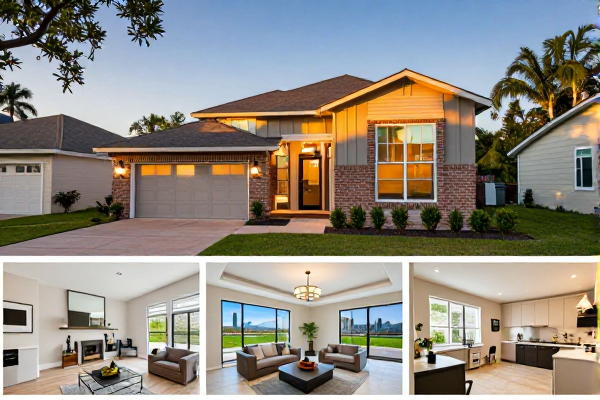
Looking ahead to 2026 and beyond, Miami's real estate market shows resilience, with forecasts indicating sustained demand due to population growth and infrastructure developments, such as new public transit projects. However, potential risks include climate-related factors, like sea-level rise, which may impact insurance costs in flood-prone zones. Investors should diversify portfolios, considering commercial properties, which have seen a 4% yield increase in retail spaces. Practical advice includes monitoring market reports quarterly and consulting with financial advisors to assess affordability. For sellers, pricing strategies should reflect current comps, while buyers might benefit from off-season purchases when competition eases. Overall, Miami remains a dynamic market with opportunities for those who plan carefully.
In summary, the Miami real estate market in 2026 offers growth potential but requires diligent research. Focus on neighborhood-specific data, understand the buying process, and stay informed on economic trends to make sound investments.