Browse

Log in / Register
 Share
Share
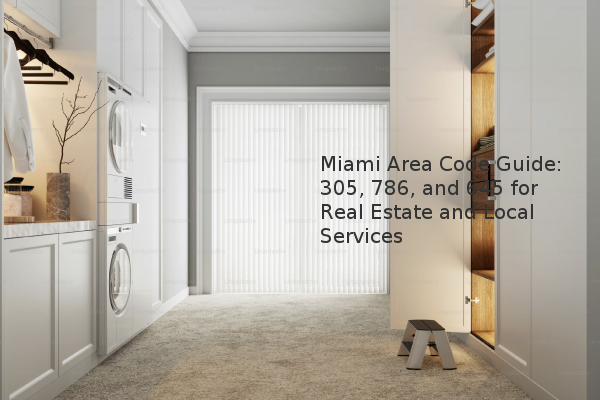
Understanding Miami's area codes—305, 786, and the newer 645—is crucial for anyone engaging with the local real estate market, from identifying property locations to verifying the legitimacy of local service providers. These numerical prefixes are more than just digits; they are geographic identifiers that can influence business communications and community perception. This guide provides a definitive overview of their coverage and practical applications.
What is an Area Code? An Area Code is the three-digit number that precedes the seven-digit telephone number in the North American Numbering Plan (NANP). It designates a specific geographic region for telephone numbering. In a real estate context, a local area code can signal that a listing agent, contractor, or service provider is based within the community, potentially implying greater local market knowledge.
Miami Area Codes: A Geographic Breakdown The Miami-Dade County area is served by an Area Code Overlay, a system where multiple area codes serve the same geographic region. This means all three codes—305, 786, and 645—cover identical territory. The Florida Public Service Commission introduced this system to meet the demand for new phone numbers.
The following table outlines the primary geographic coverage:
| Area Code | Year Introduced | Primary Coverage Area |
|---|---|---|
| 305 | 1947 | Miami, Miami Beach, Coral Gables, Hialeah, Homestead, Florida Keys |
| 786 | 1998 | Overlay of the entire 305 region (Miami-Dade County and the Keys) |
| 645 | 2022 | Overlay of the entire 305 and 786 region |
Why Area Codes Matter in Miami Real Estate For home buyers, sellers, and investors, recognizing these area codes offers several practical advantages. A key consideration is verifying the location of contacts. Since all three codes serve the same area, a number with a 645 area code is just as local as one with 305. This knowledge helps avoid misconceptions about a caller's proximity.
Furthermore, when researching local businesses like home inspectors, mortgage brokers, or Title Insurance companies (a form of indemnity insurance that protects against financial loss from defects in a property's title), confirming a local area code can be a preliminary step in establishing their operational base within the community. However, with the prevalence of mobile phones, an individual's area code may not reflect their current location.
Practical Implications for Dialing and Communication A critical rule in an overlay region is 10-digit dialing. You must dial the area code plus the seven-digit number for all local calls, even if you are calling within the same area code. For example, calling from a 305 number to another 305 number requires dialing all 10 digits. This is mandatory throughout the Miami-Dade area.
How to Identify Property Locations and Service Providers While an area code can suggest a local presence, it should not be the sole factor in decision-making. Always conduct further due diligence. For real estate professionals, using a local number can build trust. For consumers, cross-reference the business address and online reviews rather than relying exclusively on the phone number's area code to gauge legitimacy and expertise.
Leveraging area code knowledge can streamline your communications and aid in preliminary vetting of local Miami contacts. Remember that in today's mobile world, the area code is just one piece of information. Always prioritize verifying credentials and physical addresses over assuming locality based on a phone number. For the most accurate and current information, consulting the official Florida Public Service Commission website is recommended.