Browse

Log in / Register
 Share
Share
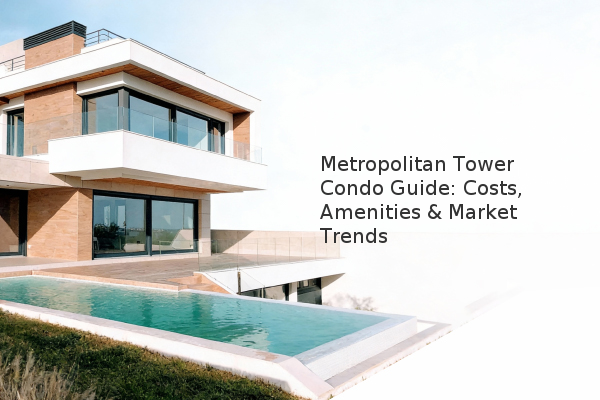
Living in a skyscraper like the Metropolitan Tower offers a unique urban lifestyle defined by luxury amenities and panoramic views, but it also involves specific financial and logistical considerations. This guide provides an objective overview of the costs, features, and market dynamics of condominium ownership in such a property, based on an assessment of current real estate data. The decision to purchase a unit here hinges on evaluating the Homeowners Association (HOA) fees against the premium services provided.
A property like Metropolitan Tower is typically a condominium, a type of housing where individuals own their individual units while sharing ownership of common areas. The lifestyle is heavily centered on its amenities. Residents often have access to a 24-hour concierge, a state-of-the-art fitness center, swimming pools, and private lounges. The primary draw, however, is often the view. High-floor units command significant price premiums for their unobstructed vistas of the city skyline. This environment appeals to professionals seeking a lock-and-leave lifestyle with minimal maintenance responsibilities, as the HOA handles exterior upkeep, landscaping, and security.
It is crucial to understand that this convenience comes at a cost. The HOA fee is a monthly charge paid by all unit owners to cover the operation, maintenance, and reserves of the building. In a full-service tower, these fees are substantially higher than in a smaller, low-rise condo building. They fund the staff salaries, building insurance, utilities for common areas, and upkeep of high-end amenities. Prospective buyers must factor this recurring expense into their long-term budget alongside the mortgage and property tax, an annual government levy based on the assessed value of the real estate.
The initial purchase price is just one component of the financial picture. A thorough assessment must include ongoing and one-time costs. As mentioned, HOA fees are a major recurring expense. For a tower like Metropolitan Tower, monthly fees can range significantly based on the unit's square footage and the building's amenity package. Below is an estimated breakdown of potential monthly costs for a hypothetical 1,200-square-foot unit, excluding the mortgage principal and interest.
| Cost Component | Estimated Monthly Cost | Notes |
|---|---|---|
| HOA Fees | $1,000 - $1,800 | Covers amenities, maintenance, staff, and common area insurance. |
| Property Taxes | $800 - $1,500 | Varies by city and state; based on the assessed value. |
| Homeowner's Insurance | $50 - $100 | Covers the interior of the unit (HOA master policy covers building exterior). |
| Utilities | $150 - $300 | Electricity, gas, and internet for the unit. |
Furthermore, buyers should be prepared for one-time costs during the purchase process. This includes the mortgage down payment and title insurance, a policy that protects the homeowner and lender from financial loss due to defects in the property title. It's also wise to inquire about the HOA's reserve fund health to assess the likelihood of future special assessments for major repairs like elevator modernization or facade work.
The condominium market in luxury high-rises can behave differently from the single-family home market. Based on recent market analyses, demand for such properties has seen fluctuations, often influenced by broader economic conditions like interest rates and urban migration patterns. While Metropolitan Tower may hold intrinsic value due to its location and prestige, its appreciation potential—the increase in property value over time—may not always outpace that of other housing types.
Current data suggests that inventory levels and the average days on market for similar properties are key indicators to watch. A high number of units for sale could indicate a buyer's market, potentially leading to more negotiable prices. Conversely, low inventory might sustain or drive up values. It is essential to review recent sales comps, or comparable sales, of similar units within the building to understand the true market value. An objective evaluation avoids overpaying based on sentiment and focuses on concrete transaction data from the past six to twelve months.
The purchasing process for a condominium involves additional steps compared to a single-family home. After securing financing, the most critical step is reviewing the HOA's governing documents. This includes the covenants, conditions, and restrictions (CC&Rs), bylaws, and recent meeting minutes. These documents reveal rules on renting, pet policies, and any pending litigation or major capital projects. This due diligence is non-negotiable.
A specialized home inspection is also recommended, focusing not only on the unit's interior but also on the building's overall condition. Finally, engage a real estate attorney or agent experienced with high-rise condo transactions. They can help navigate the complex paperwork and ensure your interests are protected.
In summary, purchasing a condominium in Metropolitan Tower is a significant decision that balances lifestyle benefits with financial commitments. Key takeaways include: thoroughly scrutinizing the HOA fees and reserve funds, understanding that market appreciation can be variable, and performing exhaustive due diligence on the building's rules and financial health. This objective approach allows for an informed real estate decision.